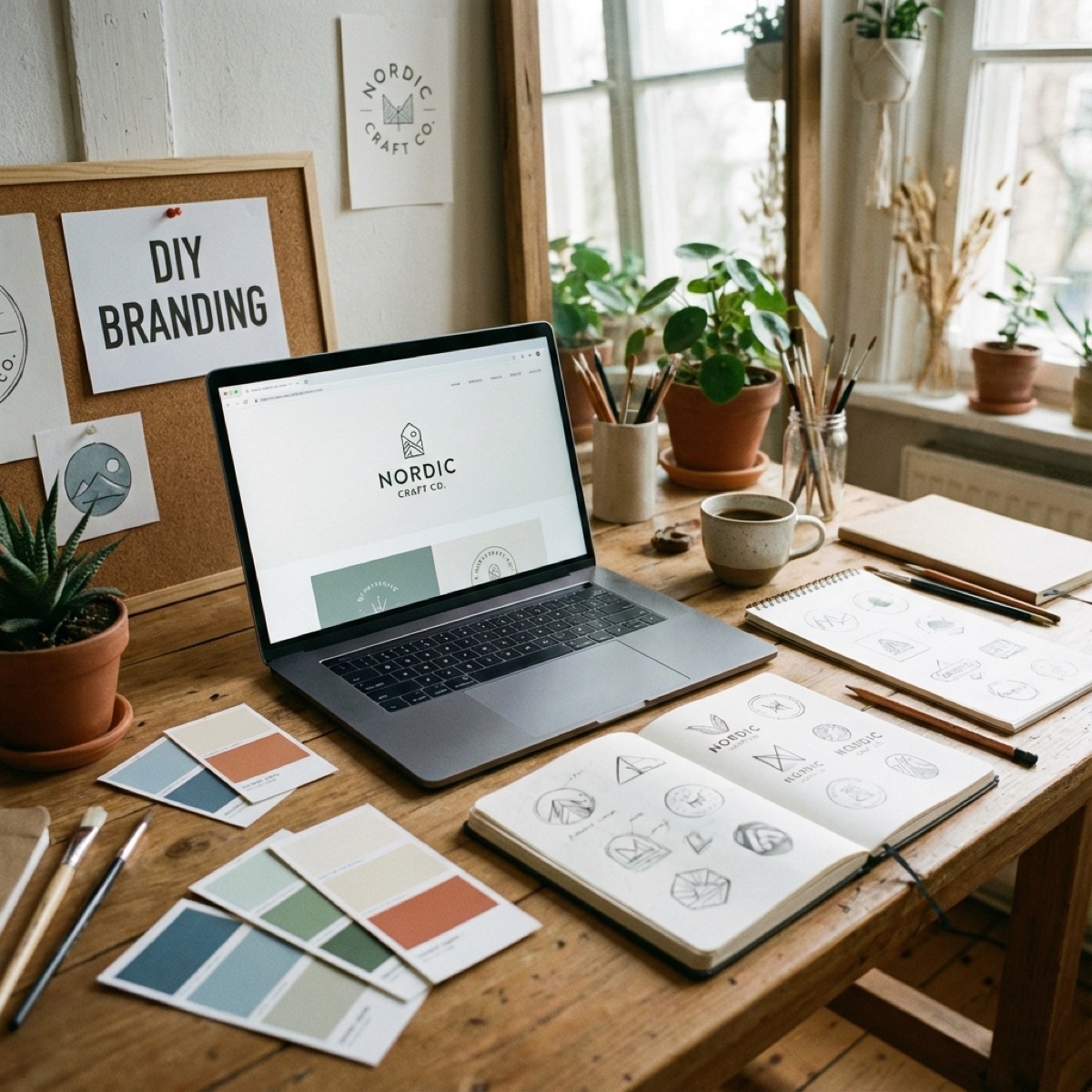
Your competitor looks polished and professional. You look... fine. But you don't have thousands to spend on branding. Here's how to build a professional brand on a budget—using tools and techniques that won't break the bank.
What Branding Actually Means
Branding isn't just a logo. It's everything that shapes how people perceive your business—your visual identity, your communication style, the experience you deliver. When clients think of your business, what comes to mind? That's your brand.
Good branding creates recognition and trust. When everything looks consistent and professional, clients feel confident booking you. When things look thrown together, they wonder what else might be inconsistent.
The good news: you don't need a branding agency to build a professional image. With some thought and the right tools, you can create something that competes with vendors who've spent far more.
Start With Your Name
Your business name is the foundation of your brand. If you haven't settled on one yet, consider:
- Clarity: Does it suggest what you do? "Manchester Mobile Pizza" is clearer than something abstract
- Memorability: Is it easy to spell and remember?
- Availability: Can you get the domain name and social media handles?
- Longevity: Will it still work if you expand your services?
If you already have a name, work with it. Rebranding is disruptive and expensive. Focus on making your current name look as professional as possible.
Creating a Logo Without a Designer
A professional logo used to require hiring a designer. Now there are alternatives that work surprisingly well on a budget.
Canva
Canva offers hundreds of free and low-cost logo templates. You can customise colours, fonts, and layouts without any design skills. It's not as unique as a custom design, but it's vastly better than clipart or no logo at all.
Fiverr and Similar Platforms
You can get a custom logo designed for £50-150 on freelancer platforms. Quality varies, so look at reviews and portfolios carefully. Request multiple concepts and revisions to ensure you're happy with the result.
Keep It Simple
The best logos are often the simplest. A clean wordmark (just your business name in a distinctive font) can be more effective than an elaborate graphic. Think about how it'll look on your van, on a business card, and as a tiny social media profile picture.
Pro Tip
Get your logo in vector format (SVG or AI file) if possible. This allows it to be resized without losing quality—essential for everything from business cards to vehicle wraps.
Choose Your Colours
Consistent colours create recognition. Pick two or three colours and use them everywhere—your logo, website, social media, menu boards, packaging.
Consider what your colours communicate:
- Green: Fresh, natural, healthy—good for organic or vegetarian offerings
- Red and yellow: Appetite-stimulating, energetic—classic food colours
- Black and gold: Premium, sophisticated—for upmarket positioning
- Blue: Trustworthy, professional—though less common in food (it suppresses appetite)
Once chosen, note down the exact colour codes (HEX codes like #FF5733). This ensures consistency whether you're designing social media graphics or briefing a sign maker.
Typography That Works
Fonts matter more than most people realise. The right font looks professional; the wrong one looks amateur.
Pick one or two fonts and stick with them. Google Fonts offers hundreds of free, high-quality options. A common approach: one distinctive font for headings and your logo, one clean readable font for body text.
Avoid overly decorative fonts that are hard to read. What looks fun in a logo might be illegible on a menu board viewed from three metres away.
Professional Materials on a Budget
Business Cards
Yes, people still use business cards. Order quality cards from Vistaprint, Moo, or similar—you can get 250 decent cards for under £30. Include your logo, name, phone, email, and website. Keep it clean and uncluttered.
Menu Boards and Signage
Your menu board is prime branding real estate. Use your brand colours and fonts. Keep it readable from a distance. A well-designed menu board suggests quality; a handwritten sign suggests budget.
Vehicle Graphics
If you have a food truck or van, vehicle graphics are high-impact marketing. They're not cheap, but they're seen by thousands of people. Get quotes from multiple sign companies, and provide your logo in vector format for the best results.
Packaging and Napkins
Branded packaging elevates the customer experience. Even simple touches—a sticker with your logo on takeaway boxes, branded napkins—reinforce professionalism. These don't have to be expensive; bulk orders keep costs down.
Your Online Presence
Your website and social media are often a client's first impression. They should look consistent and professional.
Website
You don't need an expensive custom website. Platforms like Squarespace, Wix, and WordPress offer templates that look professional with minimal effort. Choose a template, apply your brand colours, add your logo, and fill it with good photos of your work.
Social Media
Use the same profile picture (usually your logo) across all platforms. Create a consistent style for your posts—same filters, same fonts in graphics, same overall feel. Canva makes creating branded social graphics easy.
Build your professional presence
VendorPad gives you a polished online presence without the hassle. Professional profiles that make you look established, even if you're just starting out.
Start your free trialConsistency Is Everything
The most important branding rule: be consistent. The same logo, colours, and fonts everywhere. The same tone of voice in all communications. The same level of care in every customer interaction.
Create a simple brand guide for yourself—a document showing your logo, colours, fonts, and how they should be used. This keeps everything consistent as you create new materials.
Inconsistency undermines trust. If your Instagram looks different from your website, which looks different from your van, clients wonder which version is the real you.
Your Brand Is More Than Visuals
Visual identity matters, but your brand is ultimately about experience. How you answer enquiries, how you present your food, how you handle problems—these shape your reputation more than any logo.
The best branding in the world won't save a business that delivers poor service. But when great service meets professional presentation, you become memorable for all the right reasons.
Final Thoughts
You don't need thousands of pounds to look professional. A thoughtful approach—consistent colours, a clean logo, quality materials, and attention to detail—creates a brand that stands alongside vendors with much bigger budgets.
Start with the basics: logo, colours, fonts. Apply them consistently across your website, social media, and physical materials. Upgrade gradually as budget allows. Over time, small improvements compound into a brand that truly represents the quality of what you offer.