You've booked your first festival pitch. Exciting, right? But festivals are a different beast to private events. Here's everything you need to know—from power requirements to stock levels—to make your first festival a success, not a disaster.
Before You Accept the Pitch
Festival organisers will send you a trader pack weeks before the event. Read every word of it. Twice. This document contains crucial details about access times, vehicle movements, and site rules that can make or break your weekend.
Pay particular attention to:
- Load-in and load-out windows (miss these and you're stuck)
- Vehicle access restrictions during the event
- Noise curfews and generator rules
- Waste disposal arrangements
- Fire safety requirements and extinguisher specifications
Sorting Your Pitch Setup
Your pitch at a festival needs to work harder than at any other event. You'll be serving continuously for 12-16 hours a day, often in challenging weather conditions.
Ground conditions vary wildly. Pack levelling blocks, ground anchors, and heavy-duty guy ropes even if the forecast looks calm. British weather has a habit of turning festivals into mudbaths overnight, and a gazebo taking flight during service is every vendor's nightmare.
Consider your serving flow carefully. At busy periods, you might have 50 people queueing. Where will that queue go? Will it block neighbouring traders? Speak to the organisers about pitch orientation if you're concerned.
Power: The Festival Lifeline
Power at festivals comes in three flavours: mains hookup, generator hire through the festival, or bringing your own genny. Each has implications for your setup and budget.
If you're on mains power, confirm the amperage well in advance. A standard 16-amp supply won't run multiple high-draw appliances simultaneously. Calculate your total load:
- Coffee machine: 2,500-3,000 watts
- Griddle: 2,000-3,500 watts
- Chest freezer: 100-200 watts
- Lighting: 100-500 watts
- Card machine and phone charging: 50-100 watts
If you're bringing your own generator, size it at 25% above your maximum load to avoid strain. Diesel generators are quieter and more fuel-efficient for long events, but petrol units are lighter if you're tight on space.
Pro Tip
Bring twice as much fuel as you think you'll need. Many festivals restrict vehicle movements once gates open, and running out of generator fuel on Saturday night means shutting down entirely. Jerry cans stored safely away from cooking areas are essential.
Stock Levels: The Festival Calculation
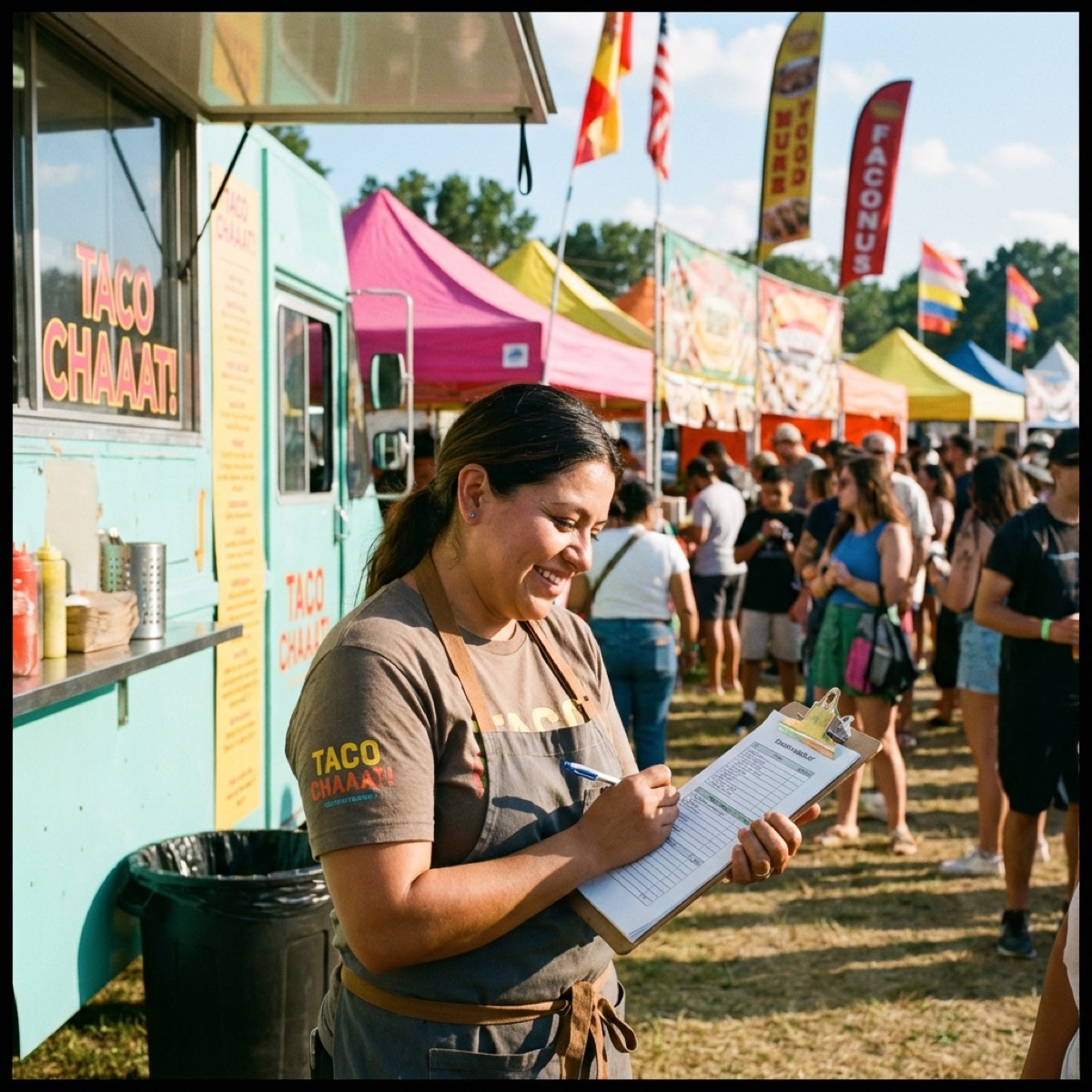
Festival stock planning requires a different mindset to private events. You're not catering for a set number—you're estimating footfall, conversion rates, and peak trading windows.
Start by finding out expected attendance figures. A well-run 10,000-capacity festival with 15 food vendors means roughly 650 potential customers per vendor. But conversion rates vary hugely depending on your offering, pricing, and position.
For your first festival, use this rough formula:
- Assume 15-20% of attendees will visit your stall
- Of those, expect 40-60% to purchase
- Plan for 60% of sales to happen during two peak periods (lunch and evening)
Build in a 20% buffer for your first event. Running out looks unprofessional and costs you money. Slight over-ordering is a learning investment.
Fresh produce presents the biggest challenge. Partner with a local supplier who can deliver mid-festival if possible, or focus your menu on items with longer shelf life. That artisan sourdough might not survive three days in a warm trailer.
Licensing and Documentation
Festivals attract environmental health visits like nothing else. Have your paperwork ready and visible from day one.
Essential documents include:
- Food hygiene certificate (Level 2 minimum)
- Public liability insurance (most festivals require £5 million)
- Food business registration
- Gas safety certificate if using LPG
- PAT testing certificates for electrical equipment
- Allergen information clearly displayed
If you're selling alcohol, you'll need to operate under the festival's premises licence. This usually means designated collection points and specific serving containers. Confirm arrangements with the organiser—getting this wrong can shut you down.
The Human Element
You cannot run a festival pitch alone. Three or four days of 14-hour shifts will destroy even the most determined sole trader. Budget for staff, even if it's friends helping out for a share of profits.
Brief your team thoroughly on food safety, pricing, and customer service expectations. Festival crowds are generally cheerful, but tired and hungry people in a queue need confident, efficient service.
Plan breaks and sleeping arrangements. Many festivals offer crew camping near the trader area. A proper night's sleep between service days isn't a luxury—it's essential for food safety and your own wellbeing.
Payment Systems
Festival-goers increasingly expect card payments, but connectivity can be unreliable. Download offline mode for your card terminal before arriving, and test it works.
Keep a cash float for those inevitable signal blackspots. Approximately 20-30% of festival transactions still happen in cash, so you'll need change. Start each day with at least £200 in mixed denominations.
After the Festival
Your work isn't done when the last customer leaves. Pack down carefully, document any equipment issues while they're fresh in your mind, and photograph your pitch before leaving.
Within a week, review your figures honestly. What sold well? What sat untouched? Where were the bottlenecks in service? This information shapes your approach to the next festival.
Ready to Streamline Your Festival Admin?
VendorPad helps mobile vendors manage bookings, track stock, and handle customer communications—so you can focus on what you do best. Start your 14-day free trial and get your admin sorted before the season kicks off.
Start your free trial