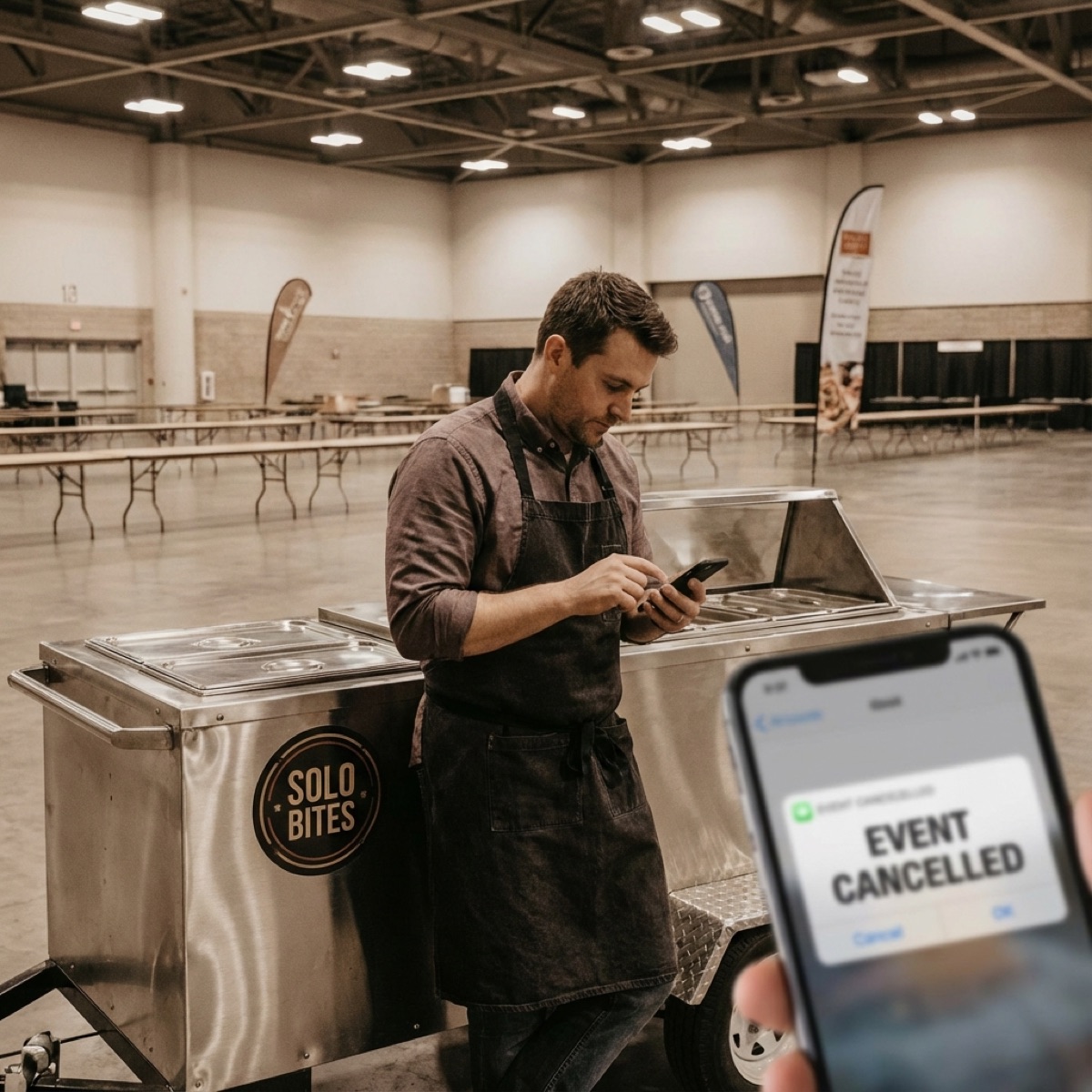
The client confirmed the booking. You turned down other work. You've prepped everything. Then they cancel 48 hours before the event. You're out of pocket, and you've lost other potential bookings. Here's how to protect yourself—and what to do when it happens anyway.
No-shows and last-minute cancellations are among the most frustrating experiences for mobile vendors. Whether you're running a street food trailer, mobile bar, or wedding catering service, a cancelled booking doesn't just mean lost revenue—it means wasted prep, spoiled stock, and missed opportunities elsewhere.
The good news? Most no-shows are preventable. And when they do happen, having the right systems in place means you won't be left completely out of pocket.
Why Clients No-Show (It's Not Always Malicious)
Before we dive into prevention, it helps to understand why clients cancel at the last minute. In most cases, it's not deliberate:
- Life happens: Illness, family emergencies, or unexpected work commitments
- Poor planning: They underestimated costs or overcommitted their budget
- Cold feet: Particularly common with weddings and large events
- Miscommunication: They thought they'd cancelled weeks ago, or never realised the booking was confirmed
- Found a cheaper option: Unfortunately, some clients will ghost you for a better deal
Understanding these reasons helps you build systems that address each one. A client who forgets needs reminders. A client worried about costs needs clear payment terms upfront. A client who might find someone cheaper needs a deposit that makes switching costly.
Your First Line of Defence: Rock-Solid Contracts
A proper contract isn't just paperwork—it's your insurance policy. Every booking, regardless of size, should have a written agreement that covers:
- Full event details: Date, time, location, and exactly what you're providing
- Payment terms: Deposit amount, payment schedule, and accepted methods
- Cancellation policy: Clear timeframes and what the client forfeits at each stage
- Your cancellation rights: Circumstances where you can cancel (weather, illness, etc.)
- Force majeure clause: What happens if neither party can fulfil due to circumstances beyond control
Your cancellation policy should be tiered. For example:
- More than 30 days notice: Full refund minus deposit
- 14-30 days notice: 50% of total fee retained
- Less than 14 days notice: 100% of total fee retained
The specific timeframes depend on your business. If you're catering large weddings with significant prep, you might need longer windows. A mobile coffee cart with minimal setup might be more flexible.
Pro Tip
Send your contract as a PDF that requires a digital signature, not just an email confirmation. Services like DocuSign or HelloSign create a legally binding record and make the commitment feel more real to the client. When someone has to actually sign something, they take it more seriously.
Deposits: How Much Is Enough?
Your deposit serves two purposes: it secures your income and it creates commitment from the client. Too low, and they'll walk away without a second thought. Too high, and you'll struggle to convert enquiries into bookings.
For most mobile vendors, a deposit between 25% and 50% hits the sweet spot. Consider these factors:
- Higher deposits (40-50%) for peak dates (Saturdays in summer, bank holidays), weddings, and events requiring significant prep or stock purchase
- Lower deposits (25-30%) for weekday events, repeat clients, and bookings with shorter lead times
- Staged payments for large bookings: 30% on signing, 40% one month before, 30% on the day
Always collect the deposit before confirming the booking in your calendar. A booking without a deposit isn't a booking—it's a maybe.
Prevention Strategies That Actually Work
Beyond contracts and deposits, there's plenty you can do to reduce no-shows:
Send confirmation reminders. A friendly email one week before and again two days before keeps the booking front of mind. Include all the details they need and ask them to confirm receipt.
Build a relationship. Clients are far less likely to ghost someone they've spoken to personally. A quick phone call after booking, even just to introduce yourself, creates connection and accountability.
Make cancellation easy—but clear. Paradoxically, making it simple to cancel properly means fewer ghosting situations. If clients know exactly how to cancel and what it'll cost them, they're more likely to do it formally rather than just disappearing.
Screen your clients. Trust your instincts. If someone is haggling aggressively on price, being vague about details, or slow to sign the contract, these are warning signs. It's okay to decline bookings that don't feel right.
Require final numbers in advance. For catering jobs, set a deadline for final guest counts (typically 7-14 days before). This locks in their commitment and your costs.
When It Happens Anyway: Your Recovery Plan
Despite your best efforts, cancellations will sometimes happen. Here's how to handle them professionally:
Stay calm and document everything. Keep all communications. You might need them if you have to enforce your contract terms or make an insurance claim.
Enforce your policy. If your contract says the deposit is non-refundable, don't cave to pressure. Being firm now protects you and sets expectations for future clients.
Try to rebook the date. Post on your social media, reach out to past enquiries who didn't book, or list the date as available on your website. Even a smaller booking is better than an empty calendar.
Salvage what you can. If you've already purchased stock, consider whether you can use it elsewhere—a pop-up event, farmers market, or donation to a local charity (which might generate goodwill and publicity).
Review and improve. After the dust settles, ask yourself: were there warning signs you missed? Could your contract be clearer? Should your deposit be higher for this type of booking?
The Bottom Line
No-shows are part of running a mobile vendor business, but they don't have to devastate your finances or your morale. With clear contracts, appropriate deposits, and proactive communication, you can minimise their frequency and their impact.
Remember: protecting yourself isn't about being difficult or untrusting. It's about running a professional business. Good clients will respect clear terms—and the ones who don't were probably going to cause problems anyway.
Ready to Protect Your Business?
VendorPad helps mobile vendors manage bookings, contracts, and payments in one place. Set up automated reminders, collect deposits online, and never chase paperwork again.