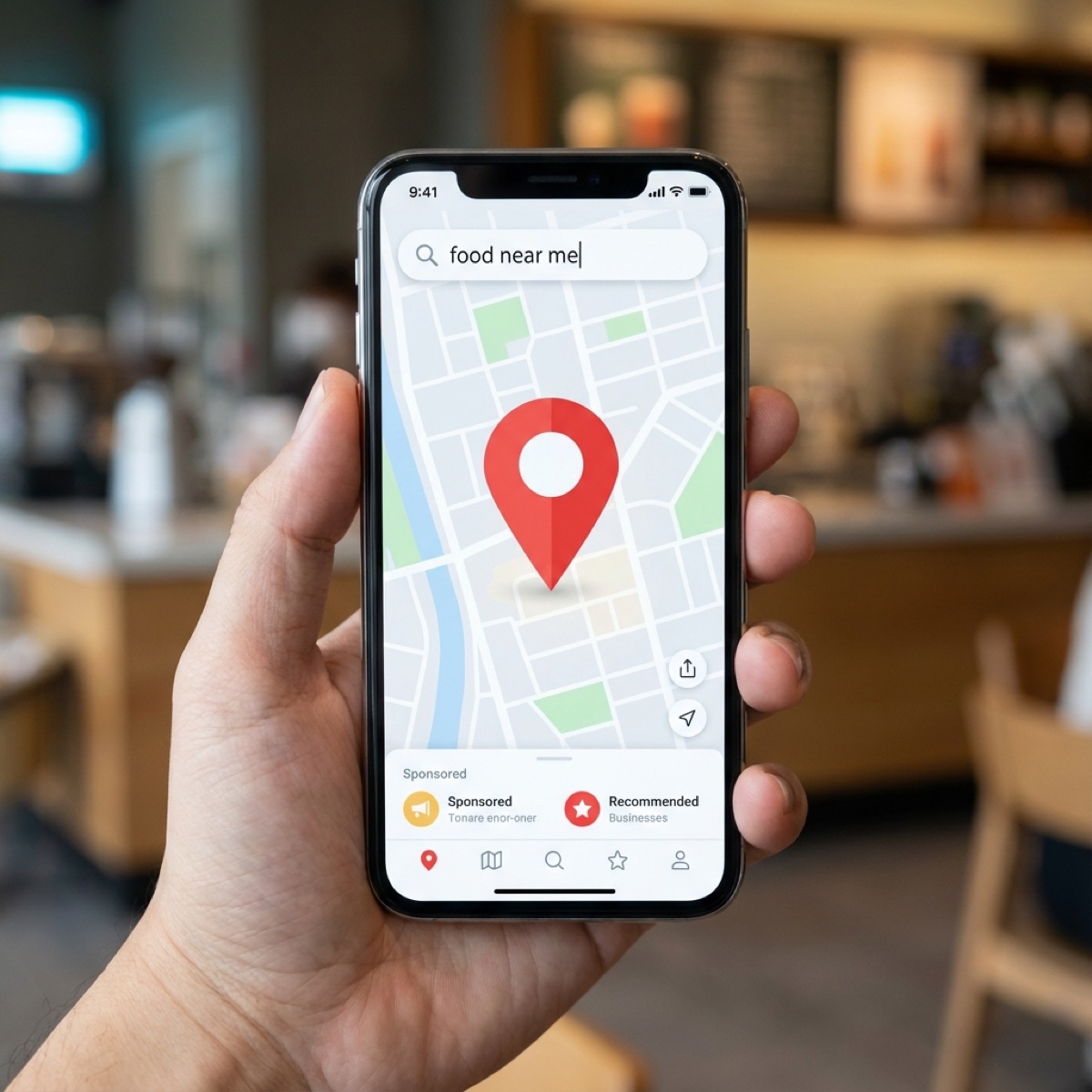
When someone searches "mobile caterer near me," your competitor shows up. You don't. Local SEO matters for event vendors, but it's not complicated. Here's how to show up in local searches—without hiring an expensive SEO agency.
What Local SEO Actually Means
Local SEO is simply making sure your business appears when people in your area search for what you offer. When a bride-to-be in Manchester types "wedding catering Manchester" into Google, local SEO determines whether you appear in those results.
For mobile vendors, this matters enormously. Most of your clients come from a specific geographic area. They're searching for services near them, and if you're not showing up, you're invisible to them—no matter how good your food is.
The good news: local SEO for small businesses is far simpler than the broader SEO world. A few basic steps can make a significant difference.
Google Business Profile: Your Most Important Asset
If you do nothing else, set up and optimise your Google Business Profile (formerly Google My Business). This is the single most impactful thing you can do for local search visibility.
Your Google Business Profile is what appears when someone searches for your business directly, or when you show up in the "map pack"—those three local results that appear with a map at the top of search results.
Setting Up Your Profile
If you haven't already, go to business.google.com and claim or create your listing. You'll need to verify your business, usually by receiving a postcard at your address or through a phone call.
Once verified, fill out every section completely:
- Business name: Use your actual trading name—don't stuff keywords in
- Category: Choose the most accurate primary category (Caterer, Food Truck, etc.) and add relevant secondary categories
- Service area: Define the areas you serve rather than just your physical location
- Hours: Keep these accurate, even if your hours are "by appointment"
- Description: Write a clear, natural description of what you offer and where you serve
- Photos: Add high-quality images of your food, setup, and team
- Services: List your specific services (wedding catering, corporate events, etc.)
Pro Tip
Post updates to your Google Business Profile regularly. Share photos from recent events, announce seasonal availability, or highlight special offers. Google favours active profiles, and these posts appear directly in search results.
Reviews Drive Rankings
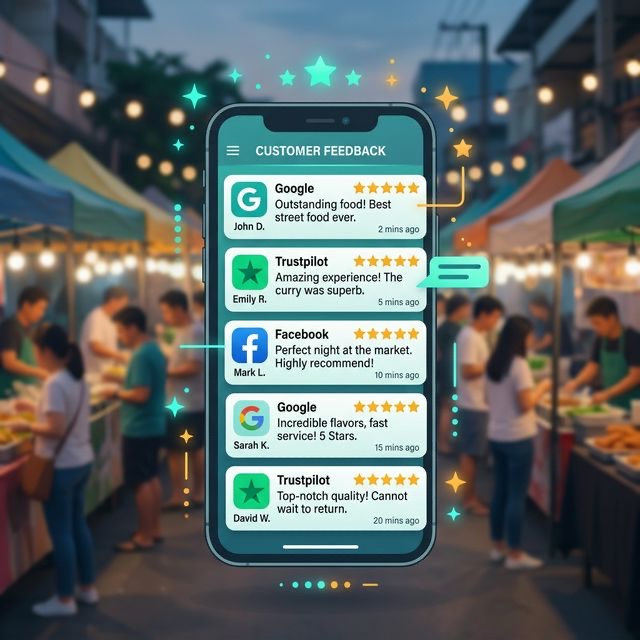
Google reviews are crucial for local SEO. Businesses with more positive reviews rank higher and get more clicks. It's that simple.
The quantity and quality of your reviews signal to Google that you're a legitimate, trusted business. A vendor with 50 five-star reviews will typically outrank one with 5 reviews, even if both have perfect ratings.
Ask happy clients for reviews. Make it easy by sending them a direct link to your review page. The best time to ask is right after an event when the experience is fresh and they're feeling positive about your service.
Respond to every review—positive and negative. Thank people for positive reviews, and address negative ones professionally. This shows potential clients (and Google) that you're engaged and care about customer experience.
Your Website Basics
Your website should clearly communicate where you operate. This sounds obvious, but many vendor websites never mention their location beyond a contact page.
Location Pages
If you serve multiple areas, consider creating pages for each. "Wedding Catering in Manchester," "Corporate Events in Leeds," and so on. These pages help you rank for location-specific searches.
Each page should have unique content—not just the same text with different city names swapped in. Mention local landmarks, venues you've worked at, or specific considerations for that area.
NAP Consistency
NAP stands for Name, Address, Phone number. These details should be identical everywhere they appear online—your website, Google Business Profile, social media, and directory listings. Inconsistencies confuse search engines and can hurt your rankings.
Directory Listings
Getting listed in relevant directories creates "citations" that strengthen your local SEO. For UK vendors, consider:
- General directories: Yell.com, Thomson Local, Yelp UK
- Wedding directories: Hitched, Guides for Brides, Bridebook
- Event directories: Add to Event, Poptop, Feast It
- Local directories: Your local chamber of commerce, council business directories
You don't need to be on every directory. Focus on the ones that matter for your niche and keep your information consistent across all of them.
Content That Attracts Local Searches
Creating content around local topics helps you rank for relevant searches. Write about:
- Venues you've worked at in your area
- Local events you've catered
- Tips specific to your region ("Best outdoor wedding venues in Yorkshire")
- Local food trends or seasonal specialities
This content naturally includes local keywords and signals to Google that you're genuinely connected to your area.
Get found by local clients
VendorPad helps you build a professional online presence that ranks well in local searches. Make it easy for clients in your area to find and book you.
Start your free trialMobile Matters
Most local searches happen on mobile phones. People are searching while planning events, often looking for quick answers. Your website must work well on mobile devices.
Test your site on your phone. Is it easy to navigate? Can people find your contact information quickly? Does it load fast? Google prioritises mobile-friendly websites in search results.
Track Your Progress
Google Business Profile provides insights showing how people find you—what searches triggered your listing, how many people clicked for directions, and how many called directly from search results.
Check these monthly. You'll see which keywords are working and whether your visibility is improving over time.
Final Thoughts
Local SEO isn't magic, and it's not instant. But consistent effort compounds over time. A vendor who spends an hour each month maintaining their Google Business Profile, gathering reviews, and creating local content will significantly outrank one who does nothing.
Start with Google Business Profile. Get it fully optimised, then ask for reviews. Once that's working, expand to directory listings and local content. You don't need to do everything at once—small, consistent steps add up to big results.