You over-ordered for a festival and threw away £200 worth of food. Next time, you under-ordered and ran out by 3pm. Stock management is a constant balancing act. Here's how to calculate the right amount—and reduce waste without running out.
Why Stock Management Matters More Than You Think
For most mobile food vendors, stock is your second biggest cost after staffing. Get it wrong, and you're either throwing money in the bin or leaving money on the table.
I've spoken to vendors who've lost £500+ at a single festival through over-ordering. I've also seen vendors turn away customers at 4pm because they ran out—missing the evening rush entirely. Both mistakes hurt, but they're avoidable.
The difference between profitable vendors and struggling ones often comes down to this: knowing exactly how much to bring.
Understanding Your Sales Data
Before you can predict future stock needs, you need to understand your past performance. If you're not tracking this already, start today.
What to Track
- Covers served per hour: How many customers you serve in each hour of trading.
- Average items per customer: Are people buying one item or a meal with sides and drinks?
- Popular vs slow sellers: Your top 3 items probably make up 60-70% of sales.
- Weather impact: Hot days sell more cold drinks. Cold days sell more hot food. Track it.
- Event type patterns: Festivals differ from weddings differ from markets.
Building Your Baseline
After 10-15 events of the same type, you'll start seeing patterns. A typical food truck might serve:
- 60-80 covers per hour at a busy festival
- 30-50 covers per hour at a regular market
- 100-150 covers total at a 100-person wedding
Your numbers will vary based on your food type, pricing, and setup speed. The point is to know your numbers, not guess them.
Calculating Stock for Different Event Types
Private Events (Weddings, Corporate)
These are the easiest to calculate because you know the guest count.
- Per head calculation: Plan for the confirmed guest count, plus 5-10% buffer.
- Course breakdown: If doing multiple services, calculate each separately.
- Dietary requirements: Get specifics in advance. Vegan and gluten-free options need separate stock.
Example: 100-person wedding, pizza service, average 1.5 pizzas per person = 150 pizzas. Add 10% = 165 pizzas worth of dough and toppings.
Festivals
Festivals are trickier because attendance doesn't equal customers. Not everyone will visit your stall.
- First-time festivals: Ask the organiser for food trader reports from previous years. How many covers did similar vendors serve?
- Repeat festivals: Use your own data from last year, adjusted for any changes in attendance.
- Location matters: A pitch near the main stage serves more than one tucked in a corner.
- Competition: Ten food vendors sharing 5,000 attendees is very different from three vendors.
Rule of thumb: At a well-organised festival, a food vendor might serve 5-15% of total attendance per day. So a 10,000-person festival might give you 500-1,500 covers across the day.
💡 Pro Tip
For your first time at a festival, stock for the lower estimate and have a backup plan. Can you do a supplier run? Can a friend bring emergency stock? Running out is bad, but throwing away £300 of perishables is worse when you don't know what to expect.
Regular Markets
Markets are your most predictable events once you've built a pattern.
- Track weekly: Same market, same day, similar conditions—your sales should be consistent.
- Seasonal adjustments: Summer markets often have 20-30% higher footfall than winter.
- Special events: Bank holiday markets, Christmas markets—these break your normal patterns.
The Waste Problem
Waste isn't just about throwing food away. It's about tied-up cash, storage costs, and the environmental impact. Here's how to minimise it:
Prep Smart
- Batch your prep: Don't prep everything at once. Do 60% before service, top up as you sell.
- Component thinking: Prep ingredients that can be used across multiple dishes.
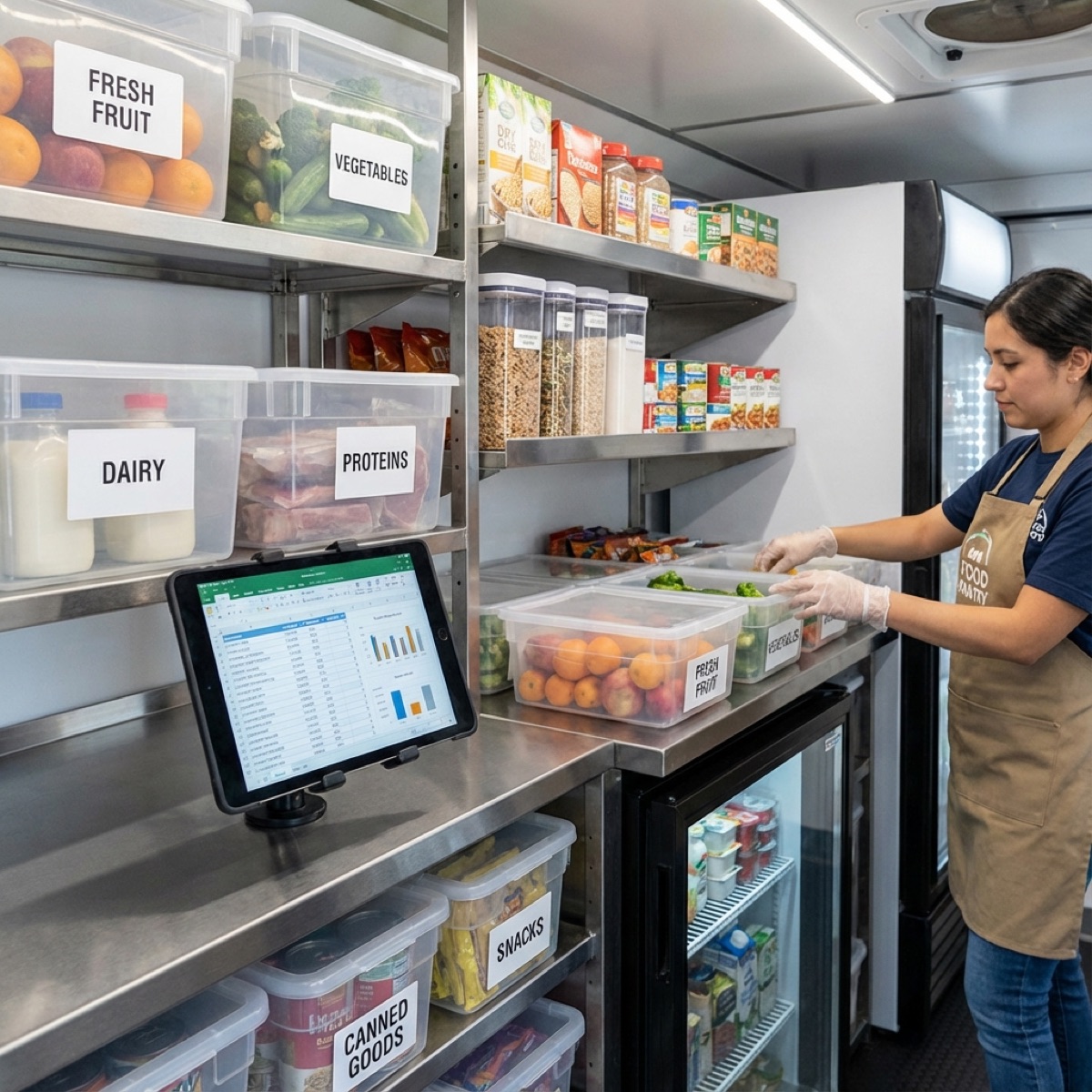
- FIFO religiously: First in, first out. Date everything in your fridge.
End-of-Event Strategies
- Discount the last hour: "£3 off everything in the last hour" shifts stock that would otherwise be binned.
- Staff meals: Feed your team from surplus—it's a perk they'll appreciate.
- Too Good To Go: List surplus on food waste apps. You'll recover some cost and avoid the bin.
- Charity donations: Some food banks accept cooked food donations. Check local options.
Supplier Relationships
Your suppliers can be allies in stock management—if you work with them properly.
- Same-day collection: Find suppliers who allow day-before or same-day pickup. Reduces the time stock sits in your fridge.
- Return policies: Some wholesalers accept returns on unopened goods. Ask before you buy.
- Credit accounts: Cash flow matters. A 30-day account means you're not paying for stock until after you've sold it.
- Emergency orders: Know who can deliver fast if you need top-up stock mid-event.
Track Your Stock Properly
VendorPad helps you track event performance, record waste, and build the data you need for smarter ordering. Stop guessing, start knowing.
Start your free trialBuilding a Stock Calculation Template
Here's a simple framework you can adapt for your menu:
| Item | % of Sales | Per 100 Covers | Buffer |
|---|---|---|---|
| Main item (burger, pizza, etc.) | 70% | 70 portions | +10% |
| Secondary item | 20% | 20 portions | +15% |
| Sides | 50% of mains | 45 portions | +10% |
| Drinks | 60% of covers | 60 units | +5% |
Adjust these percentages based on your actual sales data. Your menu is unique—the framework is just a starting point.
Common Stock Mistakes
- Optimism bias: "It's going to be huge!" Maybe. But plan for realistic, not hopeful.
- Ignoring weather: A heatwave changes everything. So does torrential rain. Check forecasts.
- Forgetting consumables: You've got food sorted, but did you bring enough napkins, sauce cups, and bags?
- Not tracking waste: If you don't measure it, you can't improve it. Log every bin bag.
- Same stock for different events: A corporate lunch crowd orders differently from festival-goers. Adjust accordingly.
The Goal: Selling Out vs Running Out
There's a subtle difference. Running out at 3pm when the event runs until 8pm is a disaster. Selling your last portion 30 minutes before close is perfect stock management.
Aim to have 5-10% of your stock remaining at the end. Less than that means you probably left money on the table. More than that means waste.
It takes practice, but vendors who master stock management consistently outperform those who guess. Start tracking today, and within a few months, you'll be ordering with confidence instead of crossing your fingers.