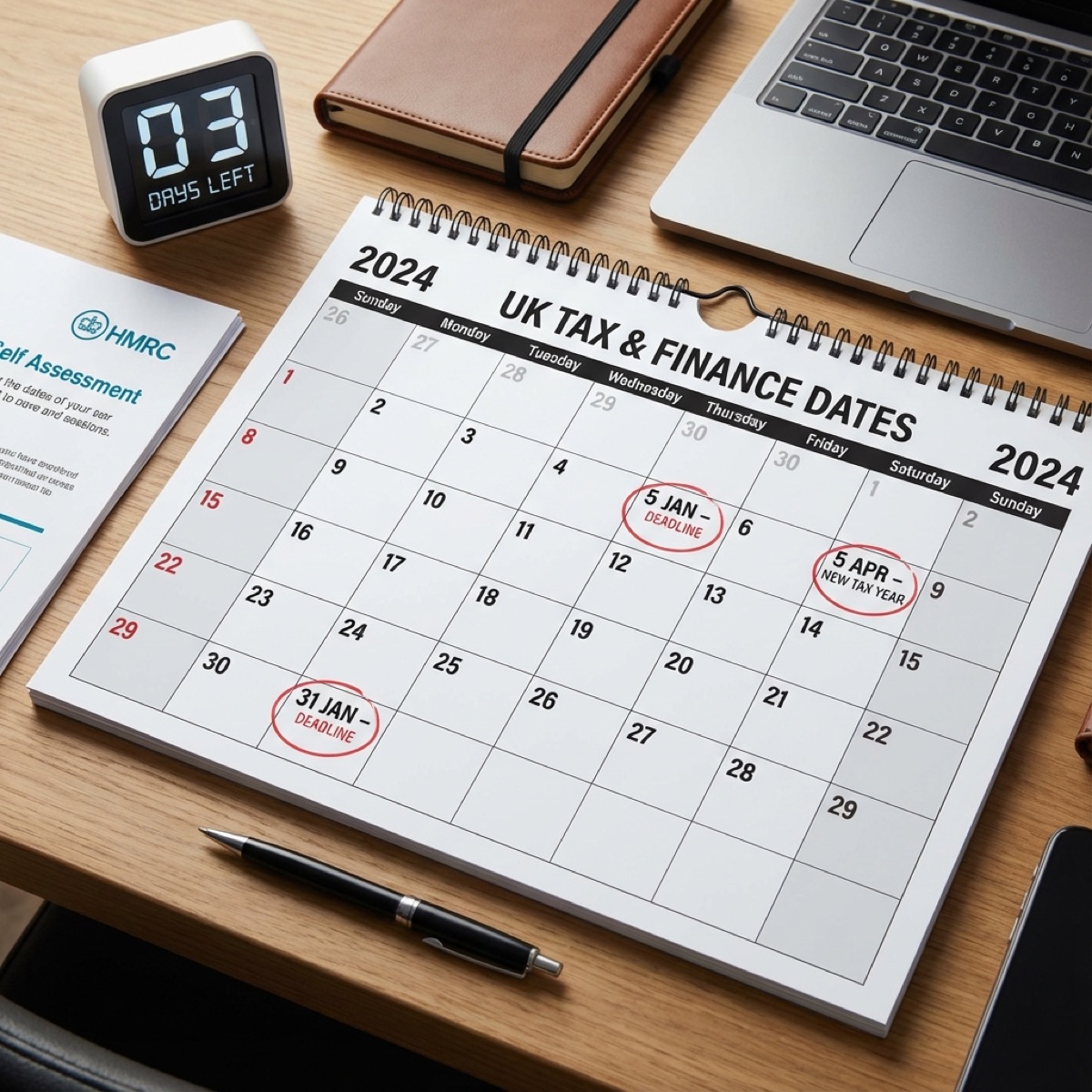
You've just realised your self-assessment is due in two weeks, and you haven't kept any records. Don't panic—but do act fast. Here are all the tax deadlines UK mobile vendors need to know, plus how to stay organised so you're never caught out again.
The Key Dates You Can't Miss
Miss these deadlines and you'll face automatic penalties. Mark them in your calendar now.
Self-Assessment (Income Tax)
| Deadline | What's Due | Penalty for Missing |
|---|---|---|
| 5 October 2025 | Register for self-assessment (if new to it) | Late filing penalties |
| 31 October 2025 | Paper tax return deadline (2024-25 tax year) | £100 instant fine |
| 31 January 2026 | Online tax return + pay tax owed (2024-25) | £100 fine + interest on unpaid tax |
| 31 July 2026 | Second payment on account (if applicable) | Interest + possible surcharges |
The tax year runs from 6 April to 5 April. So your 2024-25 tax return covers income from 6 April 2024 to 5 April 2025, and must be filed by 31 January 2026.
VAT Deadlines (If Registered)
If your turnover exceeds £90,000 (from April 2024), you must register for VAT. Once registered:
- Quarterly returns: Due one month and 7 days after each quarter ends
- Payment: Same deadline as the return
- Making Tax Digital: You must file using compatible software
If your VAT quarter ends 31 March, your return and payment are due by 7 May.
Pro Tip
Set up direct debit for VAT payments. You get an extra 3 days to pay, and you'll never accidentally miss the deadline. HMRC takes the money automatically on the 12th or 14th of the month (depending on weekends).
Payments on Account: The January Surprise
This catches many vendors off guard. If your tax bill exceeds £1,000 and less than 80% was collected at source (unlikely if you're self-employed), HMRC makes you pay your next year's tax in advance through "payments on account."
Here's how it works:
- Your 2024-25 tax bill is £4,000
- On 31 January 2026, you pay the £4,000 PLUS a first payment on account of £2,000 (half of £4,000)
- On 31 July 2026, you pay another £2,000 (second payment on account)
- This means your January 2026 payment could be £6,000, not £4,000
If your income drops significantly, you can apply to reduce your payments on account. But underestimate and you'll owe interest, so be careful.
What Happens If You Miss a Deadline?
HMRC penalties escalate quickly:
- 1 day late: £100 automatic penalty
- 3 months late: Additional £10 per day (up to 90 days = £900)
- 6 months late: Additional £300 or 5% of tax due, whichever is higher
- 12 months late: Another £300 or 5% of tax due
On top of penalties, you'll pay interest on any unpaid tax (currently around 7.5% per year). A £3,000 tax bill filed six months late could cost you an extra £600+ in penalties and interest.
The VAT Registration Threshold
From April 2024, the VAT registration threshold is £90,000. You must register if:
- Your VAT taxable turnover exceeded £90,000 in the last 12 months, OR
- You expect to exceed £90,000 in the next 30 days alone
"Taxable turnover" is your total sales, not your profit. If you make £95,000 in sales but only £40,000 profit, you still need to register.
You can also register voluntarily below the threshold. This makes sense if you sell mainly to VAT-registered businesses (they can reclaim the VAT) or if your costs include significant VAT you could claim back.
Records You Need to Keep
HMRC can investigate your records going back up to 6 years (20 years if they suspect fraud). Keep:
- All invoices (issued and received)
- Bank statements showing business transactions
- Receipts for all business expenses
- Mileage logs if claiming vehicle expenses
- Records of cash sales (even informal ones)
Digital records are fine—you don't need paper. Just make sure they're backed up and organised so you can find them if asked.
Common Expenses You Can Claim
Don't pay more tax than necessary. Most mobile vendors can claim:
- Vehicle costs: Fuel, insurance, repairs, or mileage allowance (45p/mile for first 10,000 miles)
- Food and stock: Everything you buy to sell
- Equipment: Cooking equipment, gazebos, tables, signage
- Insurance: Public liability, product liability, vehicle
- Professional fees: Accountant, food hygiene courses, certifications
- Marketing: Website, business cards, social media ads
- Phone and internet: Business portion of your bills
- Home office: If you do admin from home (simplified: £6/week or proportional actual costs)
- Pitch fees: Market stalls, festival fees, event pitches
- Uniforms and PPE: Branded clothing, aprons, safety boots
Track expenses automatically
VendorPad categorises your business expenses throughout the year, so come tax time you've got a clear record of everything you can claim. No more January panic searching for receipts.
Start your free trialSetting Aside Money for Tax
The biggest tax mistake? Spending money you'll need for your tax bill. Here's a simple rule:
Set aside 25-30% of your profit (not revenue) every month into a separate savings account. Don't touch it until your tax bill arrives.
If you're VAT registered, also set aside the VAT you collect. That money was never yours—you're just holding it for HMRC.
Should You Use an Accountant?
For most mobile vendors, doing your own self-assessment is manageable. The HMRC online system guides you through it. However, consider an accountant if:
- You're VAT registered (the rules get complicated)
- You have employees
- Your turnover exceeds £100,000
- You're terrible at record-keeping and need someone to sort it out
- You want to ensure you're claiming everything you're entitled to
A good accountant costs £300-600 per year for a simple self-assessment but might save you more than that in legitimate tax deductions you didn't know about.
Your Tax Calendar Checklist
Put these in your calendar right now:
- April: New tax year starts (6th). Time to set up fresh expense tracking
- July: Second payment on account due (31st)
- October: Paper return deadline (31st). Last chance to register for self-assessment if new
- December: Start preparing your return—don't leave it until January
- January: Online return + payment due (31st). First payment on account
- Quarterly: VAT returns if registered
Final Thoughts
Tax doesn't have to be stressful. Keep good records throughout the year, set aside money for your bill each month, and file on time. That's really all there is to it.
The vendors who struggle are the ones who ignore tax until January, then scramble to reconstruct a year's worth of records from memory. Be the vendor who spends 10 minutes a week on bookkeeping, not 10 panicked hours in January. Your future self will thank you.