It's been raining for three days straight, and you've got an outdoor wedding booked. Do you cancel? Do you have a backup plan? Here's how to handle wet weather events—and how to protect yourself contractually so you don't lose money when the weather turns.
The UK Weather Reality
Let's be honest—we're not exactly blessed with predictable weather. The average UK summer sees rain on roughly 10-12 days per month. If you're doing outdoor events, you will get rained on. It's not a question of if, but when.
The vendors who thrive aren't the ones who hope for sunshine. They're the ones who plan for rain and build it into their operations.
Contract Clauses That Protect You
Before we talk about gazebos and waterproofs, let's talk about the paperwork. Your contract is your first line of defence against weather-related losses.
Weather Cancellation Terms
Be crystal clear about what happens if weather forces a cancellation. Options include:
- Full payment regardless: You've held the date, you get paid. Works for high-demand vendors, but can feel harsh to clients.
- Rescheduling option: Offer to move to another date at no extra charge (if you have availability). Client-friendly, but risky if your calendar is full.
- Partial refund: Keep a percentage (often 50%) to cover your lost booking opportunity and prep costs.
- Weather threshold: Define what counts as "bad weather"—e.g., Met Office amber warning, wind speeds above 40mph, sustained heavy rain.
Who Makes the Call?
This is where disputes happen. Specify in your contract:
- Decision timeline: "Final go/no-go decision to be made by 8am on the event day."
- Decision maker: Is it you, the client, or the venue? Be clear.
- Evidence required: "Cancellation due to weather requires Met Office warning for the event location."
💡 Pro Tip
Add a clause stating that if the client cancels due to weather but conditions turn out fine, full payment is still due. You've turned down other work and prepped—you shouldn't lose out because they panicked at a forecast that didn't materialise.
Practical Weather Prep
Contracts are essential, but they don't keep you dry. Here's the physical kit and planning you need.
Essential Wet Weather Kit
- Heavy-duty gazebo: Not a £50 festival tent—a proper commercial gazebo rated for wind. Expect to pay £200-500. Worth every penny.
- Gazebo weights: Water-filled or sandbag weights. An unweighted gazebo in wind becomes a dangerous projectile.
- Side panels: Keep rain from blowing in sideways. Get at least two full sides.
- Waterproof matting: Rubber-backed mats for your serving area. Keeps staff safe and looks professional.
- Tarpaulins: Multiple sizes. Cover equipment, create channels to direct water away from your pitch.
- Weatherproof signage: Laminated menus, signs that won't disintegrate in rain.
Vehicle and Equipment Protection
- Electrical safety: Keep all cables off wet ground. Use cable ramps and elevate connections. RCDs are non-negotiable.
- Generator placement: Under cover, with exhaust venting safely. Water and electrics don't mix.
- Stock protection: Keep dry goods elevated. Cardboard absorbs moisture faster than you'd think.
Staff Considerations
- Waterproof uniforms: Branded waterproof jackets look professional and keep staff dry.
- Non-slip footwear: Mandatory for wet conditions. One slip injury costs more than 50 pairs of boots.
- Warm breaks: Plan for somewhere dry where staff can warm up during longer events.
Communicating with Clients
Weather anxiety is real—especially for brides. How you handle communication can turn a potential disaster into a demonstration of professionalism.
Before the Event
- Set expectations early: When they book, mention your wet weather procedures. No surprises.
- Week-before check: Touch base about the forecast. Reassure them you're prepared.
- Day-before update: Confirm your arrival time and any weather adjustments you're making.
During the Event
- Stay calm: Your energy affects the client's mood. Project confidence.
- Adapt visibly: Let them see you deploying your weather kit efficiently. Shows you've got it handled.
- Over-communicate: "We've got the gazebo up, serving will start in 10 minutes as planned."
Venue-Specific Strategies
Festivals
Festival rain is a different beast. Mud, extended exposure, and no escape.
- Arrive early: Pick your pitch before the ground turns to soup.
- Board or pallets: Create a raised platform for your serving area.
- Wellington boots: For you and all staff. Trainers won't cut it.
- Extra stock: Wet, cold people buy more hot food and drinks. Be prepared.
Weddings
Higher stakes, higher expectations. Rain at a wedding feels more dramatic than rain at a festival.
- Venue backup: Discuss with the venue beforehand. Is there indoor space if needed?
- Timing flexibility: Can you adjust serving times around showers?
- Aesthetic matters: Your wet weather setup should still look good. Clean white gazebo, not a tatty tarp.
Markets
Regular markets mean regular weather exposure. Build a robust setup you can deploy weekly.
- Permanent pitch improvements: If you trade the same spot regularly, invest in better cover.
- Early pack-down option: Know the market rules about leaving early in severe weather.
- Customer flow: Rain reduces footfall. Adjust stock levels accordingly.
Weather-Proof Your Business Admin Too
VendorPad keeps all your contracts, weather policies, and client communications in one place. When rain threatens, you've got everything you need at your fingertips.
Start your free trialInsurance Considerations
Check your policy covers weather-related scenarios:
- Equipment damage: Water damage to your kit—is it covered?
- Event cancellation: Some policies offer income protection for weather cancellations.
- Third-party injury: If someone slips on your wet pitch, you're liable. Make sure your public liability covers this.
Talk to a specialist events insurance broker. Generic business insurance often has exclusions that catch you out.
When to Actually Cancel
Sometimes, pressing on isn't safe or sensible. Know your limits:
- High winds: Gazebos become dangerous above 35-40mph. No job is worth an injury.
- Electrical storm: Lightning plus outdoor metal structures equals serious risk. Shut down.
- Flooding: If the site is flooding, get out. Equipment can be replaced; you can't.
- Access issues: If you literally can't get to the venue safely, that's a legitimate cancellation.
Document everything when you cancel—photos, screenshots of weather warnings, messages with the client. If there's ever a dispute, evidence is your friend.
Making Rain Work for You
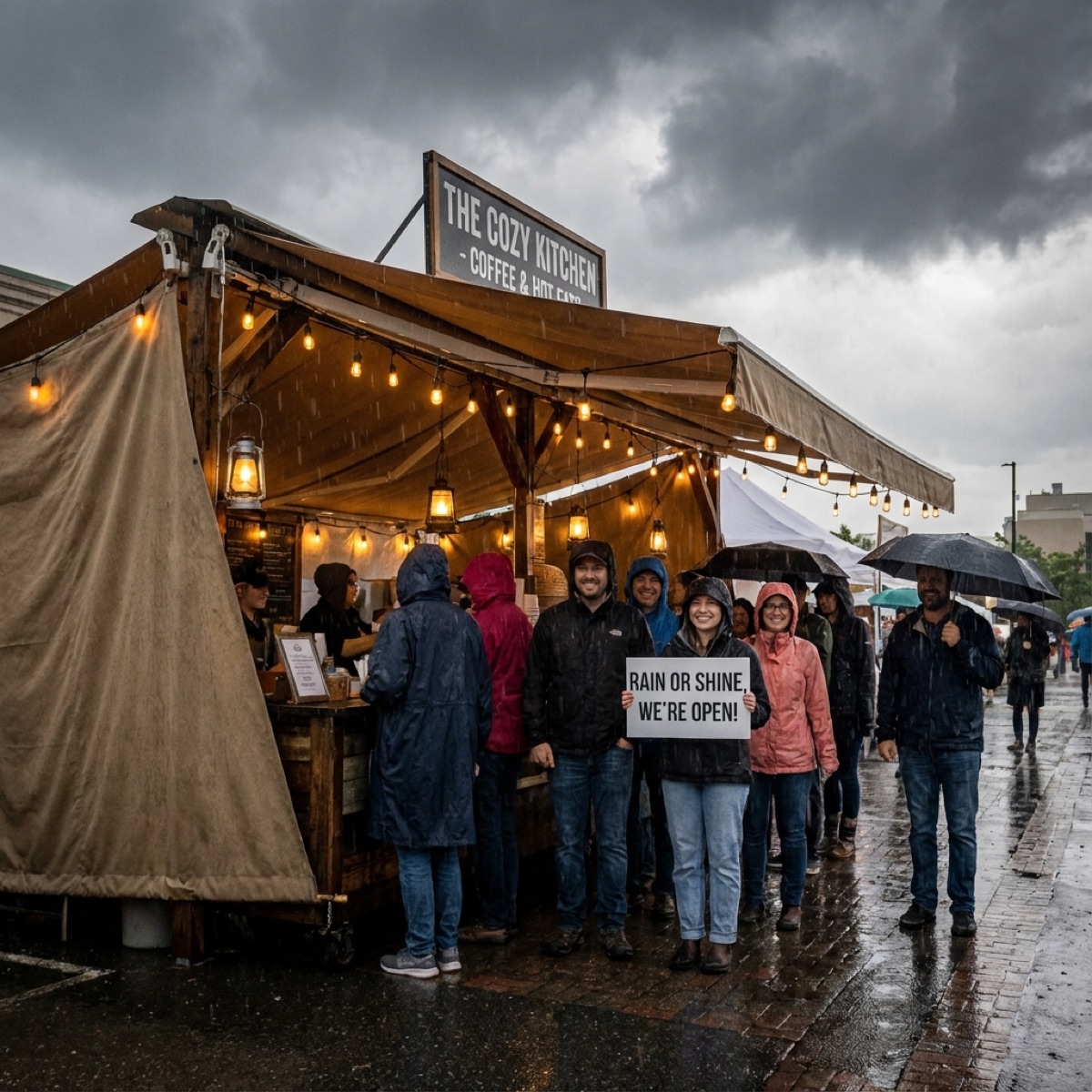
Here's the thing—bad weather can actually work in your favour. When it's wet and cold, people want:
- Hot drinks and comfort food (bigger orders)
- Somewhere covered to stand (your gazebo becomes prime real estate)
- Vendors who show up and deliver (you'll stand out from those who cancel)
The vendors who embrace wet weather—rather than fearing it—build reputations as reliable professionals. Clients remember who showed up when others bailed. That's worth more than one sunny day's takings.
Rain is part of the job. Plan for it, price for it, and deliver through it.