You're running a mobile bar, but alcohol licensing is complicated. Do you need a personal licence? What about temporary event notices? Here's what UK mobile bar operators need to know about alcohol licensing—in plain English.
Why Alcohol Licensing Is Different
Selling alcohol is one of the most heavily regulated activities in the UK. The Licensing Act 2003 controls who can sell alcohol, where, and when. Getting it wrong can mean criminal prosecution, unlimited fines, and prison sentences of up to six months.
For mobile bar operators, this creates unique challenges. You're not operating from a fixed premises with a permanent licence. Instead, you need to navigate a system designed primarily for pubs and shops.
The good news: once you understand the system, it's manageable. The key is knowing which type of authorisation you need for each situation.
Personal Licences Explained
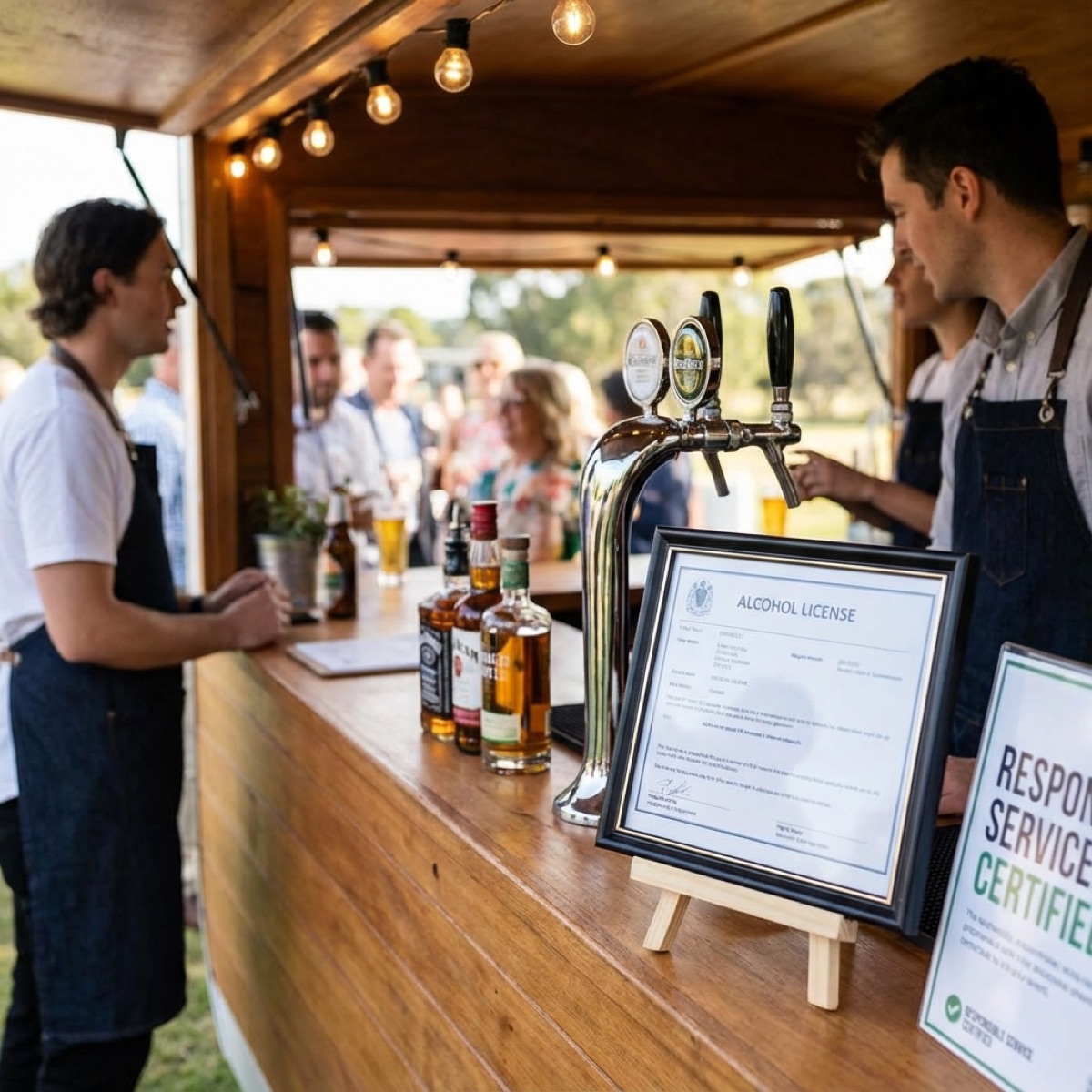
A personal licence authorises an individual to sell or supervise the sale of alcohol. If you're running a mobile bar, you or someone in your business should hold one.
Who Needs a Personal Licence?
Every sale of alcohol must be authorised by a personal licence holder. This doesn't mean a licence holder must physically make every sale—but they must authorise each transaction, either in person or through a system they've put in place.
In practice, if you're running a small mobile bar, you'll likely serve customers yourself. Having your own personal licence makes this straightforward.
How to Get a Personal Licence
To obtain a personal licence, you need to:
- Complete an accredited licensing qualification (typically a one-day course costing £100-150)
- Apply to your local council with proof of your qualification
- Pass a basic DBS (criminal record) check
- Pay the application fee (currently £37)
The qualification courses are offered by various training providers. Look for courses accredited by bodies like BIIAB (British Institute of Innkeeping Awarding Body) or Highfield. The exam is multiple choice, and pass rates are high if you pay attention during the training.
Personal licences last indefinitely (they no longer need renewal) but can be revoked if you're convicted of relevant offences.
Pro Tip
Even if you plan to operate mainly under Temporary Event Notices (which don't strictly require a personal licence holder), getting your personal licence is worthwhile. It demonstrates professionalism to clients and opens up more opportunities.
Temporary Event Notices (TENs)
For most mobile bar operators, Temporary Event Notices are the main way you'll authorise alcohol sales. A TEN permits the sale of alcohol at a specific event without needing a premises licence.
When to Use a TEN
TENs are designed for one-off or occasional events. They're perfect for:
- Weddings at unlicensed venues
- Private parties
- Corporate events
- Festivals and outdoor events
- Any event where alcohol sales aren't already covered by a premises licence
TEN Limits and Requirements
TENs have strict limits:
- Duration: Maximum 168 hours (7 days) per event
- Attendance: Maximum 499 people at any time
- Per premises: Maximum 15 TENs per calendar year for any single premises
- Per person: Personal licence holders can give 50 TENs per year; non-licence holders can give 5
- Notice period: At least 10 working days before the event (or 5 working days for "late TENs")
The fee is currently £21 per TEN. You submit the notice to the local council's licensing team, with copies to the police and environmental health.
Who Submits the TEN?
This is important: anyone can submit a TEN, but the limits apply to the person giving the notice. If your client submits the TEN, it counts against their limit, not yours. Many mobile bar operators ask clients to submit TENs for this reason.
However, if your client isn't a personal licence holder, they can only give 5 TENs per year. For frequent event hosts, this limit is quickly reached.
When Venues Already Have Licences
If you're operating at a venue with an existing premises licence that covers alcohol sales, you may not need a TEN. However, you need to understand the arrangement carefully.
The venue's Designated Premises Supervisor (DPS) is responsible for alcohol sales under their licence. You might operate as a contractor under their licence, but this needs explicit agreement. The venue remains legally responsible for compliance.
Some venues prefer you to obtain your own TEN to keep things clean and separate. Others want to use their existing licence. Clarify this during booking.
Premises Licences for Mobile Bars
In some circumstances, mobile bars can obtain their own premises licence. This makes sense if you operate frequently from the same location—for example, a permanent pitch at a regular market or event space.
Premises licences for mobile bars are complex and relatively rare. They require a formal application process, potential objections from police and residents, and annual fees. For most mobile operators, TENs are simpler.
Stay on top of licensing
VendorPad helps mobile bar operators track TEN submissions, personal licence details, and compliance documents. Keep everything organised and accessible.
Start your free trialResponsible Service Requirements
Regardless of how your alcohol sales are authorised, you must operate responsibly:
Age Verification
You must not sell alcohol to anyone under 18. Implement a Challenge 25 policy—if someone looks under 25, ask for ID. Acceptable ID includes passport, driving licence, and PASS-accredited proof of age cards.
Refusing Service
You must refuse to serve anyone who's already drunk. This can be awkward at private events, but it's the law—and your legal responsibility.
Weights and Measures
Spirits must be sold in measured quantities (25ml or 35ml). Wine by the glass must be offered in 125ml measures (though you can offer larger). Use government-stamped measures or verified optics.
Common Mistakes to Avoid
- Missing TEN deadlines: Late TENs can be refused, leaving you unable to serve alcohol legally
- Exceeding the 499 person limit: This invalidates your TEN—the event becomes unlicensed
- Assuming the venue has it covered: Always verify and get confirmation in writing
- Not carrying your personal licence: You should have it with you when supervising alcohol sales
- Ignoring local conditions: Some areas have additional restrictions on alcohol sales
Final Thoughts
Alcohol licensing for mobile bars involves more complexity than many operators expect when starting out. But the system is navigable once you understand it.
Get your personal licence—it's an investment in your credibility and flexibility. Understand how TENs work and plan ahead to meet notice periods. And always verify the licensing arrangement for each event before you turn up.
Operating unlicensed isn't worth the risk. The consequences are serious, and reputational damage in the events industry spreads quickly. Do it properly, and you'll stand out as a professional operator that venues and clients can trust.