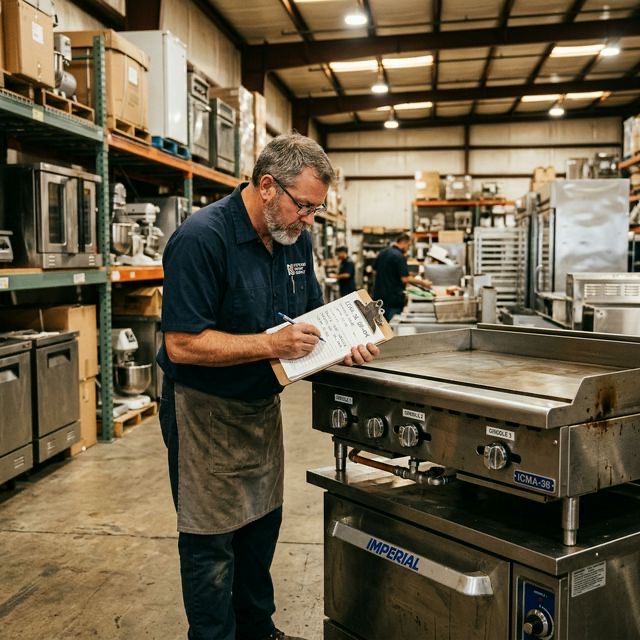
Starting or upgrading a mobile catering business is expensive. A new commercial griddle costs £800–2,000. A decent generator, £1,500+. A full van conversion can run £15,000–40,000. Second-hand equipment can slash these costs by 40–70%—but buying badly can cost you more in the long run. Here's how to buy smart.
Where to Find Second-Hand Equipment
Online Marketplaces
- Facebook Marketplace: The biggest source. Search for specific items and set location radius alerts. Join vendor buy/sell groups—"Mobile Catering Equipment UK," "Street Food Traders Buy & Sell"
- eBay: Better for smaller equipment. Check seller ratings and read descriptions carefully. Collection-only listings are often better priced
- Gumtree: Still active for catering equipment, particularly in larger cities
- Catering equipment specialists: Companies like Regale Microwave, CE Online, and Nisbets Clearance sell refurbished equipment with short warranties
Auctions
Restaurant and pub closures mean regular catering equipment auctions. You can get commercial-grade equipment at a fraction of retail:
- John Pye Auctions: Regular catering lots, online bidding available
- Bidspotter: Aggregates UK auction listings including catering equipment
- Local auction houses: Often cheaper due to less competition. Check listings weekly
Auction tips: Set a maximum bid before you start. Factor in buyer's premium (typically 15–20% on top). Inspect in person if possible—"sold as seen" means exactly that.
Vendor Networks
Other vendors are often your best source. When someone upgrades their setup, they need to shift their old equipment. Let your network know what you're looking for—a casual mention at an event can lead to exactly what you need.
💡 Pro Tip
The best deals appear in January and February when vendors who had a tough season decide to close. Watch the buy/sell groups closely during the off-season—complete van setups occasionally appear at distress prices.
What to Inspect Before Buying
General Rules
- Always see it working: If a seller won't demo the equipment running, walk away. "It worked last time I used it" is not good enough
- Check for rust: Surface rust is cosmetic. Structural rust—on frames, legs, or gas connections—is dangerous and expensive to fix
- Look at the electrics: Frayed cables, loose connections, non-standard plugs are red flags. Rewiring isn't cheap
- Smell it: Persistent grease or gas smells can indicate poor maintenance or leaks
- Ask why they're selling: "Upgrading" is good. "It's been in storage for two years" means potential problems
Specific Equipment Checks
Griddles and grills:
- Check the cooking surface for warping—place a straight edge across it
- Test all burners individually. Uneven flame means blocked jets
- Inspect gas hoses and regulators for cracks
Refrigeration:
- Turn it on and wait 30 minutes. Check it reaches temperature
- Listen for unusual noises—rattling or clicking suggests compressor issues
- Check door seals by closing a piece of paper in the door. It should hold firm
- Look for ice buildup—indicates failing seals or thermostat problems
Generators:
- Ask for service history. Regular oil changes = cared-for generator
- Check the hour meter. Under 500 hours is low use; over 2,000 is high
- Start it cold. Difficulty starting when cold suggests worn components
- Listen for knocking or excessive vibration
- Check the fuel tank for rust (inside—use a torch)
Trailers and vans:
- Check the chassis for rust, especially around wheel arches and the floor
- Inspect the gas system—any modification should have a Gas Safe certificate
- Run the water system and check for leaks
- Verify it has a valid gas certificate and electrical certificate
- Check the brakes, lights, and towing hitch (if trailer)
What to Always Buy New
Some items aren't worth the risk second-hand:
- Fire extinguishers: They expire, and you can't verify their condition reliably. New ones are £15–30
- Gas hoses and regulators: They perish. Always fit new, certified hoses when setting up equipment
- Thermometers: Accuracy matters for food safety. A new digital probe is £10–20
- Chopping boards and food-contact plastics: Bacteria harbours in scratches and cuts. Cheap to replace
- PPE and first aid kits: Safety equipment should always be current and certified
Negotiation Tips
- Cash talks: Offering cash on collection almost always gets you a better price. Sellers want quick, clean transactions
- Bundle deals: If a vendor is selling up entirely, offer to take multiple items for a package price
- Point out flaws honestly: "The seal needs replacing—I'll need to spend £50 on that, so can we adjust the price?" is fair and effective
- Don't lowball insultingly: Offering 30% less is negotiation. Offering 70% less is offensive and kills the conversation
- Be ready to walk away: There's always another listing. Don't let urgency push you into a bad deal
💡 Pro Tip
Before buying any second-hand equipment, get a quote for the equivalent new item. If the second-hand price is more than 60% of new, and there's no warranty, you might be better off buying new with finance spread over 12 months. The peace of mind and warranty can be worth the difference.
After You Buy
- Deep clean everything: Commercial degreaser, sanitiser, and elbow grease. You don't know where it's been
- Get it serviced: A professional once-over on major equipment (especially gas appliances) is a small investment for safety and reliability
- Replace consumables: New oil, new gas hoses, new filters. Start fresh
- Test thoroughly: Run equipment through a full service simulation before your first event. Better to find problems in your kitchen than at a wedding
Buying second-hand is one of the smartest financial decisions you can make as a mobile vendor. The key is patience—don't rush into the first listing you see. Know what you're looking for, inspect thoroughly, negotiate fairly, and always factor in the cost of making it ready for service. Your future self (and your bank balance) will thank you.