Saturday service. Queue's building. Someone at the front wants to know whether the flatbread has sesame in it. If your honest answer is "probably not", this one's for you. Allergen rules sound like a mountain of faff, but most of it comes down to one sheet of paper and an afternoon of reading labels. Let's get you sorted.
First, two numbers worth knowing
They explain why the rules exist. Across twenty years of NHS records, hospital admissions for food reactions trebled. Deaths halved over the same stretch. More people reacting, fewer people dying. The difference? Somebody at the counter knew what was in the food. The figures come from a BMJ study of every UK admission between 1998 and 2018.
Buried in the same study is a surprise for anyone selling milkshakes or soft serve. In school-age kids, the food most likely to cause a fatal reaction isn't peanuts. It's milk. Everyone's watching for the nut allergy while the milk allergy stands quietly in the queue.
How many allergic customers do you actually meet? The Food Standards Agency reckons about 6% of UK adults have a confirmed food allergy. That's roughly 2.4 million people. Work a festival with five thousand through the gate and around 300 of them will walk past your hatch before closing.
What the law actually asks of you
It depends on one question: did you wrap the food before the customer asked for it?
Food you make to order
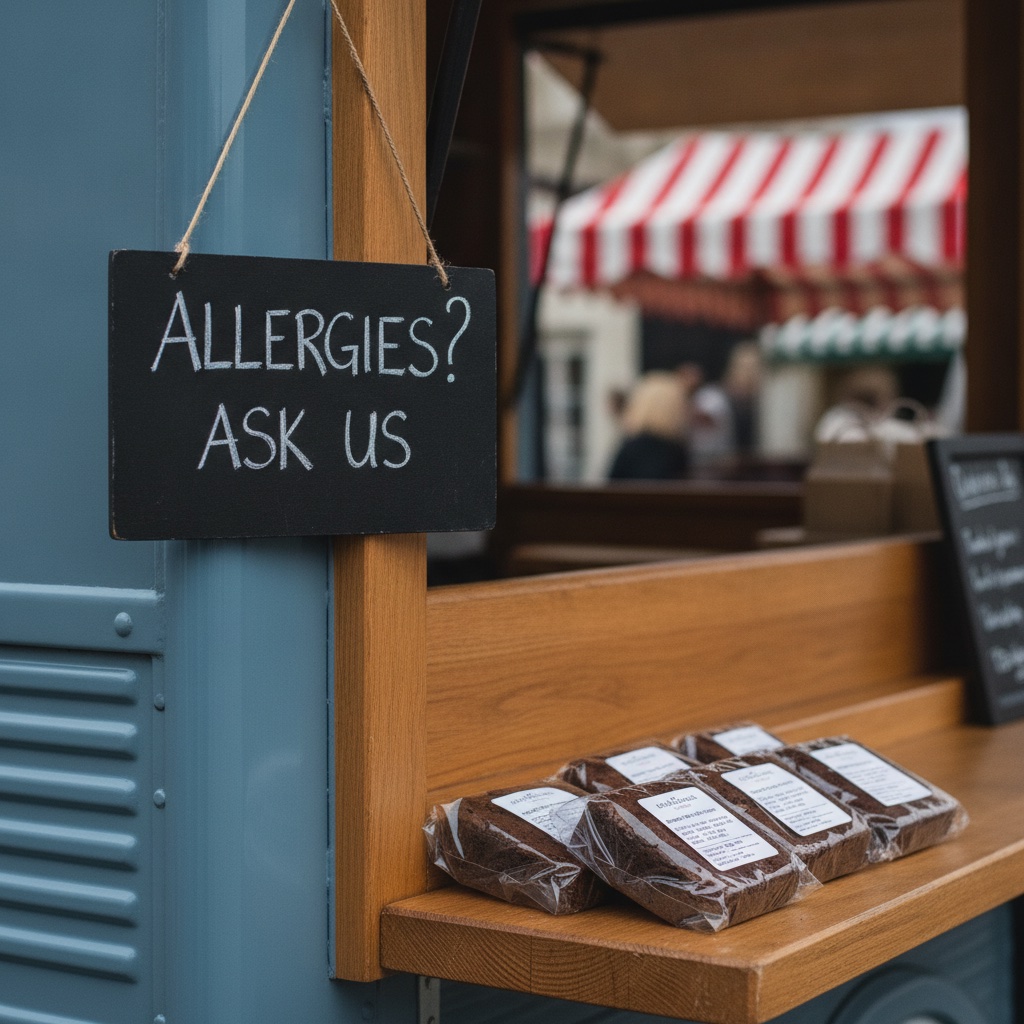
Burgers built at the grill. Doughnuts bagged while they watch. For anything made fresh in front of the customer, you need to be able to say which of the fourteen allergens are in each item. There has to be a written sign inviting people to ask, too. One chalkboard line does it: "Allergy or intolerance? Talk to us before you order."
Anything you wrap in advance
Different rules since October 2021, when Natasha's Law came in. Cellophane brownies on the counter, pre-filled sandwiches in the chiller, chutney you jarred at home: each one needs a proper label. Name of the food, every ingredient in weight order, allergens made obvious (bold works). The law is named after Natasha Ednan-Laperouse, a teenager who bought an airport baguette with sesame baked into the dough. Nothing on the packet mentioned it. She died that day. The FSA's PPDS guidance walks through the edge cases if you're not sure which side of the line a product sits.
The fourteen allergens (and where they sneak in)
Here's the list to learn: celery, cereals containing gluten, crustaceans, eggs, fish, lupin, milk, molluscs, mustard, peanuts, sesame, soybeans, sulphites, tree nuts. Learning it is the easy half. The sneaky half is what's hiding in the stuff you buy in:
- Mustard: sits quietly in stock cubes, spice blends and most commercial mayo. The one that catches people out.
- Sesame: in more bakery products than you'd guess. Check your buns.
- Lupin: a flour some bakeries use. You've probably never bought it knowingly, which is rather the point.
- Sulphites: dried fruit and wine, mostly. Counts when it's over 10mg per kilo.
- Cashews in the pesto: some brands swap out pine nuts when prices climb. Same jar, different allergen.
💡 Pro Tip
Set aside one quiet afternoon and read the ingredient declaration on every jar, tub and sack in the van. Write down what you find. From then on you only need to re-check when a supplier or recipe changes. Until you've done this once, any allergen answer you give is a guess.
One sheet of paper fixes most of this
Verbal answers are legal for made-to-order food. But be honest about what Saturday looks like. Twenty deep at the hatch, the new lad on his second shift, and a customer asking about sesame. If the answers live in your head while you're at the cash and carry, he'll say "should be fine". Businesses have been lost to that sentence.
The fix costs a sheet of paper. Menu items down the side, the fourteen allergens across the top, ticks where they apply. Laminate it. Tape it inside the hatch where staff can see it. New menu item? New row, same day. When environmental health walks the rows at a big event, a well-used allergen grid is the quickest way to make an officer relax.
Where vendors get caught out
- "May contain traces": voluntary wording, declares nothing. It won't cover you.
- The shared fryer: battered cod at noon means the "gluten-free" chips stopped being gluten-free at noon.
- Mid-event substitutions: borrow a tub of mayo from the next stall and your labels are out of date.
- The owner's day off: if the allergen knowledge leaves the pitch when you do, it was never really a system.
Enforcement comes from your local authority, working from the FSA's allergen guidance for food businesses. Usually an improvement notice first. Prosecution when it's serious. Worth knowing: plenty of event organisers now ask for allergen paperwork with the pitch application, so the same grid that keeps you legal is quietly winning you bookings.
Get the paperwork done this week
Our free Allergen Matrix Template is that one-sheet grid, ready to fill in. The Food Labelling Template covers anything you wrap in advance. Both are free downloads.
Browse All TemplatesRain, licences, allergens: it's all part of the same job, and none of it needs to be scary. Read the labels once. Fill in the grid. Laminate it. Sorted. Five minutes whenever the menu changes keeps it that way, and the parent scanning your stall for somewhere their allergic kid can safely eat becomes your most loyal customer.