Music licensing is the compliance topic vendors most enjoy ignoring, right up until an invoice arrives from a body they've never heard of. DJs get the worst of the confusion, but this one touches more of you than you'd think: the speaker on your coffee cart counts too. Here's who actually needs what, in plain English, with the two organisations sorted out once and for all.
Two rights, two bodies, one licence
Every commercial track carries two separate rights: the songwriter's (collected by PRS for Music) and the recording's (collected by PPL). For years businesses needed both licences separately. Now they're bundled as TheMusicLicence from PPL PRS Ltd, one invoice covering both. The founding principle is broad: music played outside a domestic setting counts as public performance, even if the only audience is your own staff doing the washing up.
The speaker on your stall
Playing background music at your pitch is public performance, which technically points to TheMusicLicence. In practice the organiser at a market or event often holds a licence that covers music on site. That word "often" is doing real work in that sentence. If tunes are part of your stall's personality, ask the organiser whether their licence covers traders. Get the answer in writing. Trading somewhere unlicensed with your playlist going is your liability, not theirs. Fees are cheaper than settlements every single time.
Or trade in glorious silence and let the fryer provide the ambience. Also legal. Cheaper too.
DJs, this is your bit
Three separate questions decide whether a mobile DJ is fully legal, and most DJs have only ever thought about one of them:
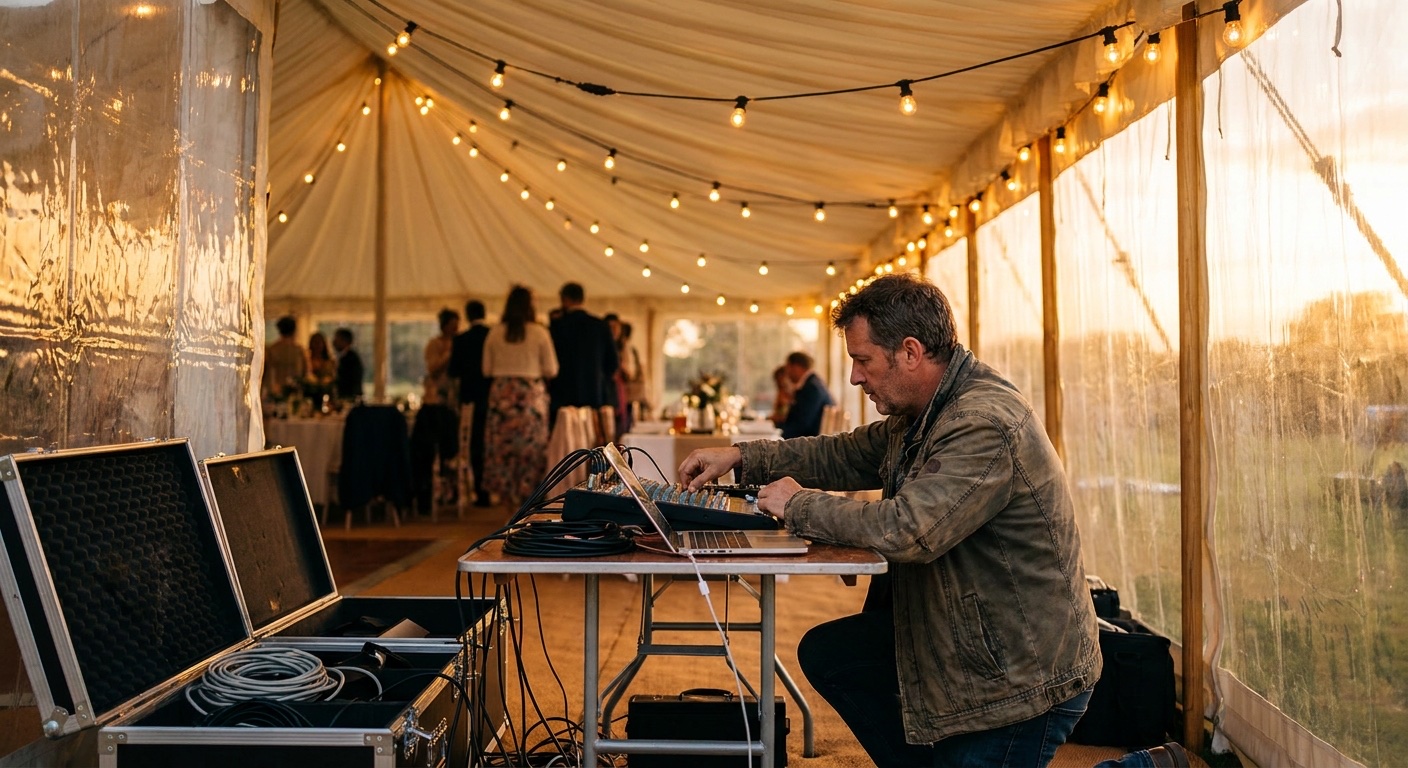
- The performance: usually covered by the venue's licence, not yours. Function rooms, hotels and clubs carry TheMusicLicence for exactly this. Genuinely private family events like weddings sit outside "public performance" in most cases, which is why nobody's ever asked you for one at a marquee do.
- Your music library: here's the one that catches people. Copying tracks between formats for professional use (ripping CDs to a laptop, building USB sticks from downloads) needs a ProDub licence, priced in tiers by how many tracks you copy. It exists precisely for DJs, karaoke hosts and fitness instructors.
- Streaming services: your personal Spotify or Apple Music account is licensed for personal use. Playing a paid gig from a consumer streaming account breaches the terms you agreed to, however common it is. DJ-specific services exist for exactly this gap.
💡 Pro Tip
Some event organisers now ask DJs for their ProDub certificate alongside PAT and insurance, especially the corporate bookers. Having it in the same phone folder as your other paperwork means one more "yes, attached" that your competitors answer with a pause. Legal compliance as a sales advantage. Again.
Quick answers to the questions you're now asking
- "I only play weddings, am I fine?" For the performance itself, generally yes. Your library still needs ProDub if you've copied tracks between formats. The two issues are separate.
- "The venue says their licence covers me." For playing at their premises, plausible. Get it in one email line. It never covers how your library was built.
- "I bought all these tracks!" Buying a download licenses you to listen, not to copy it to three USB sticks for professional use. Annoying. That's the law as written though.
- "What about my van's radio?" A radio audible only to you while driving is domestic. The same radio turned outward at a busy pitch becomes background music. Position matters.
The pattern across all of it matches the rest of your paperwork, from PAT and insurance to TENs: the rules are mostly reasonable, the fees are mostly modest, and the trouble only ever finds the people who assumed rather than asked.
One folder for every certificate
Our free Annual Compliance Calendar tracks the renewals, and the Staff Training Record covers the rest of what bookers ask for.
Browse All TemplatesSo: venue licence for the room. ProDub for the library. A proper service for streaming. And one written question to every organiser whose event gets your playlist. Ten minutes of sorting, then back to the music. Which was the whole point.