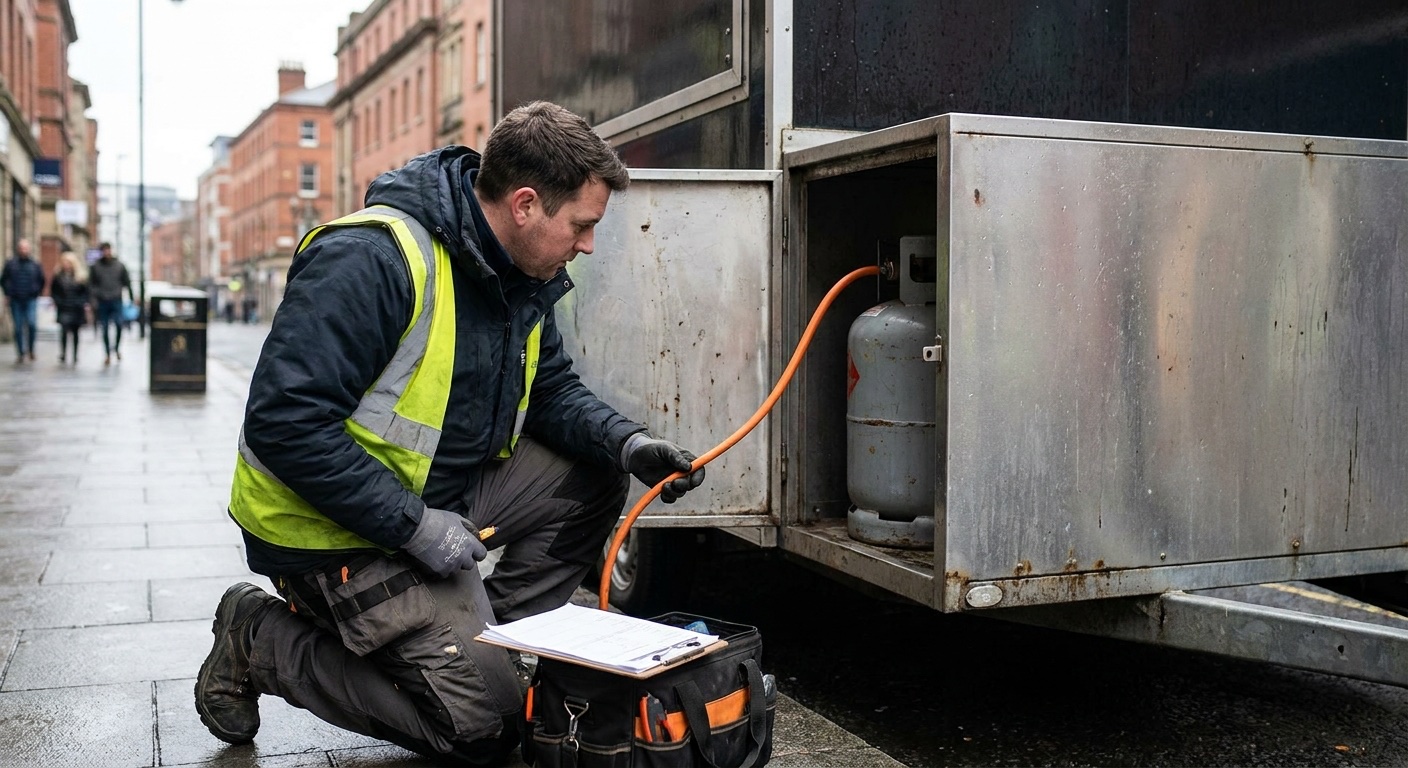
Gas is the one bit of the van that can hurt somebody the same day you get it wrong. Not paperwork-wrong. Properly wrong. The good news is that staying safe and legal comes down to one annual visit, a few habits at setup, and knowing exactly what the engineer is looking for when they crawl round your cylinder locker. Here's the lot.
The certificate organisers ask for
For a mobile catering unit running on LPG, the document is usually called a CP44: a gas safety certificate for mobile catering, renewed annually. Event organisers and councils ask for it in the same breath as your insurance. Most big events won't let you fire up without one.
Who can issue it matters more than the paper itself. It has to be a Gas Safe registered engineer. Not just any of them, either. Gas Safe engineers carry qualifications for specific types of work, so you need one certified for commercial catering and LPG, ideally with mobile units on their card. Ask before you book. Check the ID card when they arrive; the categories are printed on the back. A domestic boiler engineer, however lovely, is the wrong person for your griddle. The legal backdrop to all this sits in the HSE's catering gas safety sheet and NCASS's gas law guide.
What the engineer actually checks
- Flame failure devices: every commercial gas appliance needs one. If the flame blows out, the gas stops. Older kit without them fails, no argument.
- Hoses and connections: perished, cracked or stretched hose is the most common fault on mobile units. Cheap to replace, lethal to ignore.
- Regulators: the right pressure for your appliances, in date, properly seated on the cylinder.
- Ventilation: gas appliances in a metal box need air. The engineer checks your vents match what's burning.
- Cylinder storage: upright, secured, outside or in a purpose-built locker that vents downward (LPG is heavier than air, so leaks pool at floor level).
- Tightness test: the whole pipework system under pressure, hunting for leaks you'd never smell over the fryer.
A tidy unit sails through in an hour. What fails vans, engineers will tell you, is almost never the appliances. It's the connections between them: the hose someone extended with a jubilee clip in 2023, the missing regulator seal, the cylinder wedged behind a fryer because the locker was full of napkins.
Make the visit cheap and quick by being ready for it. Have every gas appliance accessible and cold, the cylinder locker emptied of anything that isn't a cylinder, and a list of your appliances with model numbers if you can manage it. If a hose or regulator is on its way out, say so up front. Engineers charge for time, and the vendor who spends twenty minutes moving stock boxes off the griddle pays for those twenty minutes.
One more reason the certificate earns its keep: fire officers. At bigger events the fire safety walk-round happens before gates open, and gas is the first thing they look at. An in-date CP44 plus a tidy locker usually means a nod and a move-along. The alternative is being the van that holds up the whole row's sign-off at 9am.
Your daily habits matter as much as the annual visit
The HSE's LPG guidance expects the people using the gas to be trained in using it safely. That includes whoever's helping on a Saturday. The routine worth drilling:
- Before service: a visual once-over of hoses and connections. Thirty seconds. You're looking for kinks, cracks and anything that moved in transit.
- Changing cylinders: flame off, valve closed, outside if humanly possible, never with the fryer still lit behind you.
- Smell gas? Valve off, no switches, no flames, everyone out, ventilate. Then find it before you relight. A leak you can smell is a leak that's been running a while.
- End of day: cylinder valves closed, always. Not just appliance knobs. The valve.
- Overnight: cylinders stay in the vented locker or outside secured, never loose inside a closed-up van.
💡 Pro Tip
Book your CP44 renewal for late winter, not spring. Every mobile caterer in the country wants an engineer in March and April before the season starts. In January you'll get a date within the week, at a sensible price, with time to fix anything that fails.
Where vans get caught out
- The borrowed appliance: a mate's spare griddle bolted in mid-season isn't on your certificate. New kit means the engineer comes back.
- The barbecue bottle: patio gas fittings and catering setups don't mix. Use the right cylinders with the right regulator.
- The expired certificate at the gate: organisers do check dates. A CP44 that ran out in June ends your festival in August.
- The napkin locker: the cylinder locker is for cylinders. Stock stored around them blocks the ventilation that makes the locker safe.
Put the routine in writing
Our free LPG & Gas Safety Checklist turns all of this into a tick-sheet for setup and pack-down, and the Annual Compliance Calendar makes sure the CP44 renewal never sneaks up on you.
Browse All TemplatesMost compliance jobs protect your bookings. This one protects your crew, your customers and the van you've built the whole business around. One engineer visit a year, thirty seconds of looking every morning, valves closed every night. That's the whole discipline. Do it boringly, forever.