Wedding fair season kicks off in September, and the sales pitch from organisers writes itself: hundreds of engaged couples, one room, bring your best table. The bit they don't mention is the stand fee, which for a decent regional fair sits anywhere from a long lunch to a few hundred pounds. Whether that's the best marketing money you spend all year or an expensive Sunday standing up depends almost entirely on what you do before and after the doors open.
Why fairs still earn their keep
Couples at a fair are actively booking. Bridebook's 2026 wedding report puts the average UK wedding at £20,604 across a survey of 7,000 couples, and a healthy slice of that goes on exactly what mobile vendors sell: catering, drinks, cakes, photography, entertainment. One booked wedding usually repays a season of stand fees. The maths isn't the problem. Wasted conversations are the problem.
Not all fairs are worth your Sunday
A venue open day with forty couples who've already booked that venue can out-earn a giant expo with a thousand browsers, because every conversation is with someone who needs suppliers for a confirmed date at a place you can definitely work. Big fairs win on volume, venue days win on intent. Early in your wedding push, take both and measure which one turns into bookings. After a season you'll know your answer, and it's rarely the shiniest event.
Before the fair, do the unglamorous work
- Ask who's coming: organisers know their numbers. How many couples attended last time? A fair that won't say has told you something.
- Book with a goal: "get bookings" isn't one. Twenty proper conversations and ten follow-ups you're allowed to make is a goal.
- Sort your capture: decide exactly how you'll take details before you arrive. A clipboard works. A QR code to a short form works better, because nobody can lose it in a handbag.
- Prep a taster: if people can eat or drink what you sell, sampling beats any banner ever printed.
On the day, have conversations rather than handing out brochures
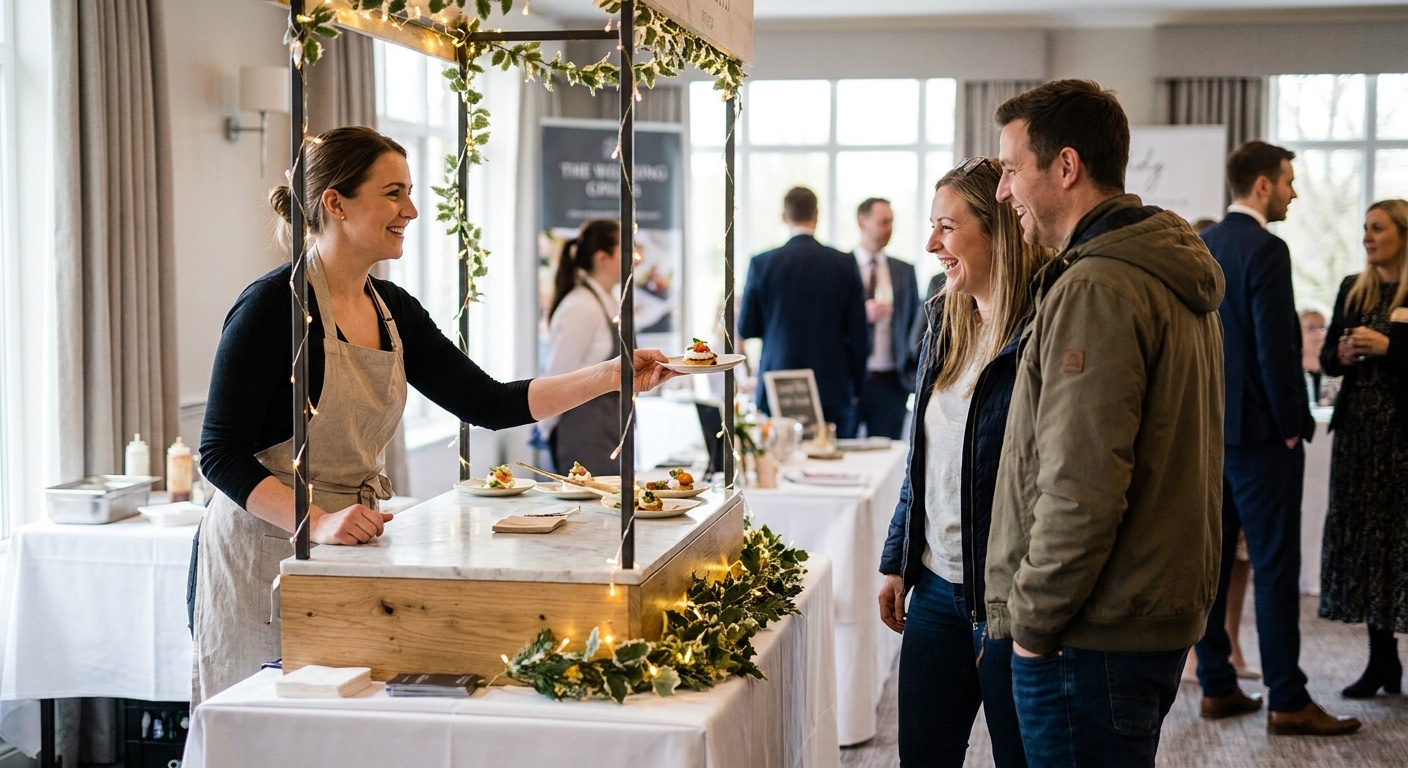
The busiest stands at any fair aren't the prettiest. They're the ones where the vendor asks questions. Date booked yet? Venue sorted? How many guests? Two minutes of listening tells you whether this couple is yours, and couples remember the supplier who asked about their day over the one who recited a price list. Hand the brochure over at the end of the chat, not the start, or it does the talking for you and it's worse at it.
Capture details in the moment, every time. The fatal fair mistake is the mental note. By 4pm you've spoken to sixty people and the lovely couple from Abergavenny with the barn venue have merged into everyone else. Name, date, venue, what they liked: written down before they've left the stand.
💡 Pro Tip
Note one personal detail per couple: the dog that's coming to the ceremony, the gluten-free mum, the venue with no kitchen. Opening your follow-up with it ("you mentioned the barn at Usk has no power...") is the difference between a memory and a mailshot.
After the fair is where fairs are won
Most exhibitors follow up once, late, with a generic email. Couples book the suppliers who reply while the fair is still warm. Send your first follow-up within 48 hours, personal, short, with one clear next step: a tasting date, a call, a quote. Then a second nudge a fortnight later for the quiet ones. After that, leave them be. Enquiries come from everywhere at this point in the year, and the couples who went quiet in September have a habit of reappearing in January when the planning panic sets in. Keep the list.
Track every conversation somewhere that isn't your head or a fair-branded notepad you'll lose in the van. That Facebook message from Tuesday, the clipboard sheet from Sunday's fair, the email from the venue open day: one list, one place, with a reminder to chase each one. Forgotten follow-ups are the most expensive mistake in wedding work, because the couple didn't say no. You just never asked again.
Turn the fair sheet into bookings
Our free Wedding Tasting Menu Template gives your follow-up a next step worth saying yes to, and the Customer Feedback Form tidies up your capture sheet for the day itself.
Browse All TemplatesBook the autumn fairs with your eyes open: a real attendance number from the organiser, a capture plan, a follow-up written before you set up the table. Do that and the stand fee stops being a gamble. Skip it and you've paid a few hundred pounds to hand out brochures that end up lining a magpie's nest of wedding freebies. The couples are there and they're spending. Be the stand that remembers them.