Between the last September wedding and the first Christmas market sits a six-week season most vendors treat as downtime. Halloween trails. Pumpkin patches. Fright nights. Then Bonfire Night with its long weekend of displays. Cold evenings, big crowds, hungry people stood in fields. It's tailor-made mobile catering weather. Half the trade sleeps through it. Not you. Not this year.
Why this window is better than it looks
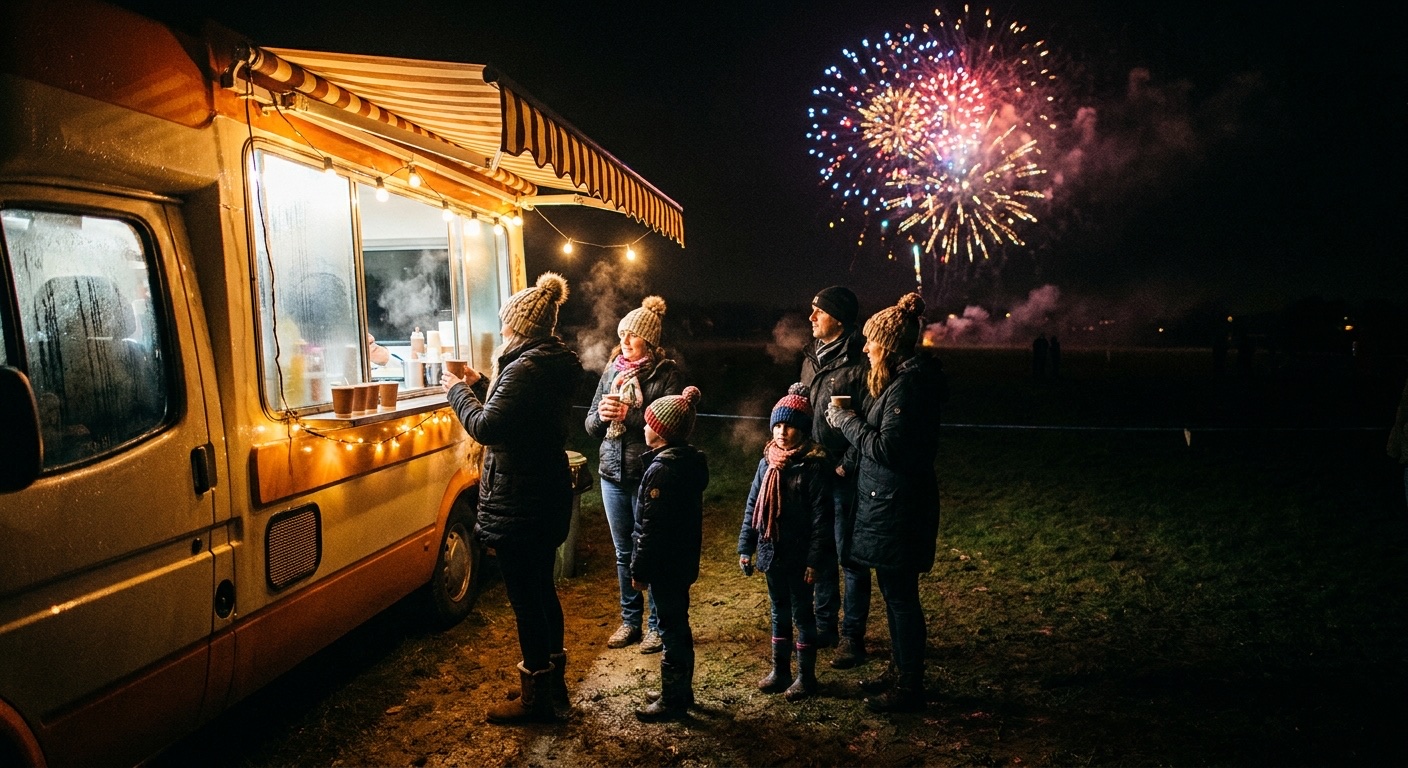
The autumn events season has quietly become enormous. Pumpkin patches went from a novelty to a fixture of every farm's calendar. Halloween trails sell out National Trust properties. And Bonfire Night remains what it's always been: the one night of the year when thousands of people voluntarily stand in a cold, dark field for two hours, positioned conveniently near wherever the food vans are.
Cold-weather crowds behave differently, in your favour. They'll queue for hot drinks they'd walk past in July. They're buying to warm their hands as much as their stomachs. And the events themselves run early evening, which means you can work a school-run crowd at a pumpkin patch by day and a display by night without the 4am starts festivals demand. The wet weather kit earns its keep, mind. Fields in November are fields in November.
Who's organising, and when to ask
- Farms and pumpkin patches: booking catering now for October. Smaller farms often have no catering sorted at all, which makes a polite September email less an application, more a rescue.
- Round tables, rotary clubs and rugby clubs: the people behind most local bonfire displays. They plan in September, they're volunteers, and a vendor who makes their catering easy gets asked back for a decade.
- Councils and parks: the big displays with the big crowds. Applications run earlier and more formally, worth chasing today.
- Schools and PTAs: fright nights and firework fundraisers everywhere. Small crowds, low pitch fees, lovely margins. The parents then become your Christmas customers.
💡 Pro Tip
Pitch the organiser a percentage deal if the fee scares them. Volunteer-run displays are often nervous about upfront costs. "No fee, 15% of takings to the display fund" gets you into events that never advertise for caterers. Everyone leaves with the warm glow of a good deal. Which, in November, counts double.
Tune the menu for the dark and the cold
The autumn crowd wants heat, hands-free, and a bit of theatre. Anything served hot in a cup or a cone beats anything served on a tray, because gloves. Hot chocolate becomes a headline act rather than an afterthought, and a marshmallow-loaded version at a premium price sells to every child within sight of it. Soup does numbers it never manages in daylight. And whatever your speciality is, one seasonal spin on it (the word "pumpkin" or "toffee" will do) gives the crowd their photo and you your margin.
Two operational notes for night trading: light your stall like you mean it, because in a dark field the brightest van gets the longest queue, and take twice the cash float you'd expect. Card readers get temperamental in cold fingers and crowded fields, as we covered in the card reader comparison. A backup way to take money is a backup revenue stream.
The safety bit, briefly
Night events in fields concentrate every operational risk you already manage: generators and trailing cables in the dark, gas in the cold, crowds of children moving fast. Your gas routine and cable ramps do the heavy lifting, plus one autumn-specific rule: know where the display's exclusion zone is. Your pitch, your van and especially your gas store all sit well outside it. The organiser will have a plan. Read it before you agree the pitch, not on the night.
Get autumn-ready in an afternoon
Our free Multi-Event Packing List handles the night-trading kit additions, and the Event Profit & Loss Calculator tells you afterwards which autumn events earn a permanent place in the calendar.
Browse All TemplatesSix weeks. Dozens of local events. Thin competition, plus crowds that buy hot things enthusiastically. Send five emails this week: two farms, two clubs, one school. That's the whole plan. By the time the Christmas markets open, you'll have banked a season most vendors didn't notice happening.