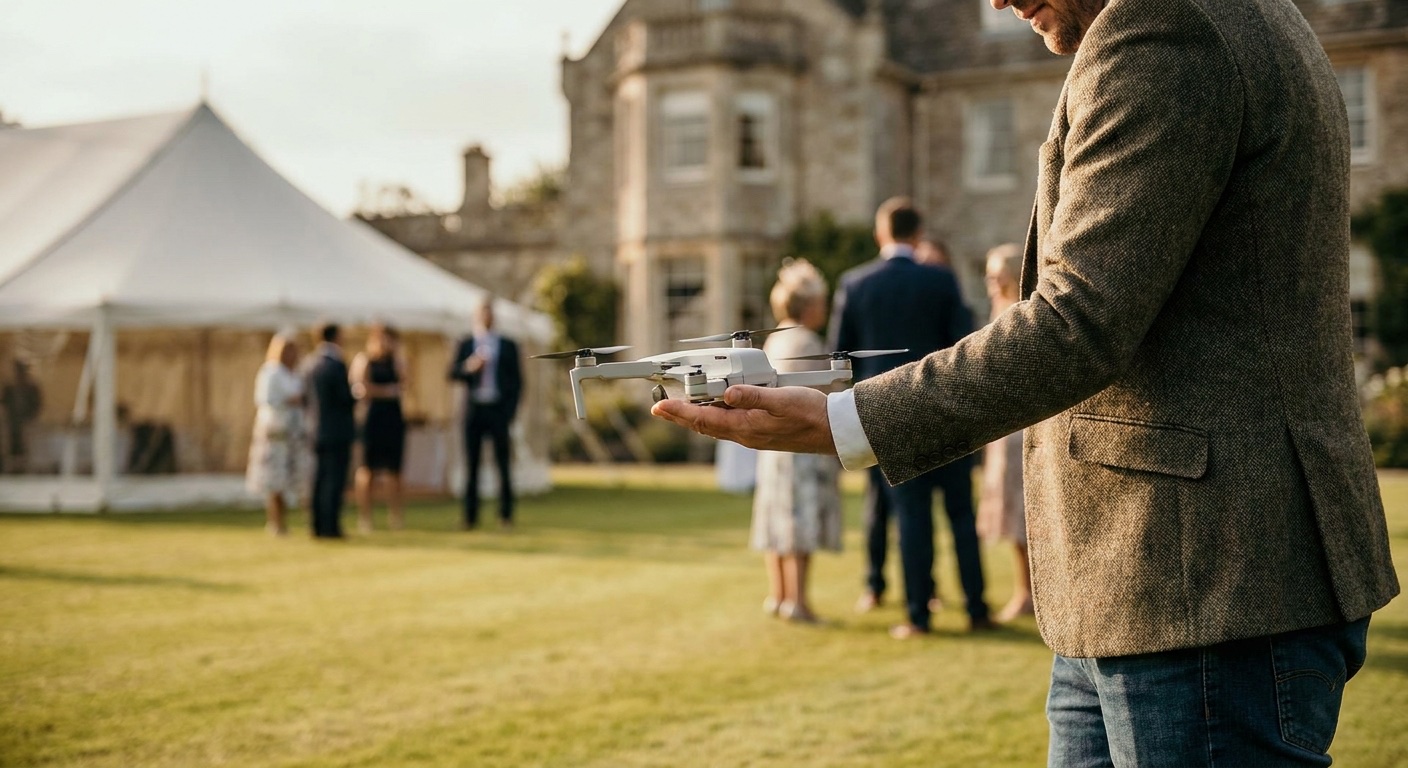
Couples now ask for drone shots the way they ask for a first-dance playlist: casually, assuming it's simple. The aerial shot of the venue, the confetti from above, the sparkler send-off framed from fifty feet. Beautiful. Also aviation, legally speaking, which means the photographer holding the controller has stepped into the Civil Aviation Authority's world. Here's the paperwork and the judgement calls, so the wow shot never becomes the awkward conversation.
The two IDs almost everyone needs
UK drone law starts with registration through the CAA's drone service. It comes in two parts. People confuse them constantly. The flyer ID is for the person flying. A free online theory test. Valid five years. The operator ID is for whoever's responsible for the drone: £11 a year, and the ID number has to be labelled visibly on every drone you operate. A camera drone of 100g or more needs that operator ID, which in practice means every drone a wedding photographer would ever carry. Flying a camera drone at a paid job without these is the aviation equivalent of driving uninsured. Organisers and venues have learned to ask.
Why wedding work is the hard case
Drone rules get stricter the closer you fly to people who aren't part of your operation. A wedding is nothing but people who aren't part of your operation: guests, the couple, the venue staff, next door's garden party. This is exactly why the sub-250g drones became the wedding photographer's workhorse. Below that weight the rules give you the most freedom around people. The kit still shoots superb footage. The whole risk conversation gets easier.
Heavier drones with better cameras pull you into qualification territory. The A2 Certificate of Competence lets suitably classed drones work closer to people than the default rules allow, with distance requirements attached. Beyond that sits the specific category and proper operational authorisations, which is agency-work land. For most wedding photographers the honest advice runs: sub-250g for anything involving guests, the A2 CofC if your kit or ambitions grow past it. Any request the rules won't cover gets a polite no. "The CAA won't let me fly over your guests during the ceremony" is a sentence couples accept instantly, by the way. Blame the regulator. That's what they're for.
💡 Pro Tip
Scout the venue on booking, not on the morning. Ten minutes with a drone map app tells you if the venue sits in a flight restriction zone (airfields catch out more weddings than you'd think, and so do prisons, oddly). Restrictions you discover in advance are a planning note. Restrictions you discover on the day are a refund conversation.
The checklist bookers are starting to use
- Operator ID current and labelled: the £11 renewal is exactly the kind of small print that lapses quietly. Diary it with your insurance.
- Insurance that mentions drones: commercial drone flights need proper cover, and your standard photography public liability may not include aerial work. One phone call to check, before the season not during it.
- Venue permission in writing: the venue owns the ground you take off from. Most say yes happily. The one that doesn't would have said so on the day, loudly.
- A weather plan the couple already knows: wind cancels drone shots more often than rain. Set the expectation at booking that aerials are weather-dependent. No one's disappointed on a gusty Saturday then.
Make the paperwork part of the pitch
Everything above sounds like burden. Flip it. "CAA-registered, insured for aerial work, airspace checked before I quote" is a differentiator in a market where plenty of operators are winging it, in every sense. Venues remember the drone operator who asked permission properly and recommend accordingly, the same way they remember the caterer with the paperwork ready. Compliance keeps being the cheapest marketing there is.
Keep the aerial admin with the rest
Our free Annual Compliance Calendar holds the operator ID renewal alongside your insurance dates. The wedding templates cover the rest of the booking trail.
Browse All TemplatesTwo IDs, insurance that says the word "drone", venue permission, an airspace check per booking, honest weather expectations. That's the full kit. The shot from fifty feet stays magic. The paperwork underneath it is thirty quid and an afternoon. Fly legal. Charge properly for it. Let the couples brag about the footage.