The booking's confirmed, the pitch fee's paid, then the email lands: "Please send your PAT certificate and proof of public liability insurance." Every organiser asks. Here's the odd part: neither document is quite what the law actually demands. Knowing the difference saves you money. Knowing what organisers want anyway saves you bookings.
The PAT testing surprise
Ready for this? Annual PAT testing isn't a legal requirement. That's not us being clever, it's the Health and Safety Executive's own words: the law "does not say how this should be done or how often". What the Electricity at Work Regulations 1989 actually require is that your electrical kit is maintained in a safe condition. How you prove that is up to you.
HSE goes further. In low-risk settings a competent member of staff can do visual checks. New equipment doesn't need testing at all, because it should arrive safe. There's not even a legal requirement for those little green stickers.
So why does every festival application form demand an annual PAT certificate? Because organisers need a simple way to check hundreds of traders. A dated certificate from a tester is simple. You can be completely legal without one and still lose the pitch. The certificate isn't really about the law. It's about the form.
Our advice: get the test done yearly anyway. A mobile PAT tester will work through a van's worth of kit in an hour or so. The certificate then opens doors all season. As business costs go, it's one of the cheapest yeses you'll ever buy. Fighting the form on a technicality is a hobby, not a business plan.
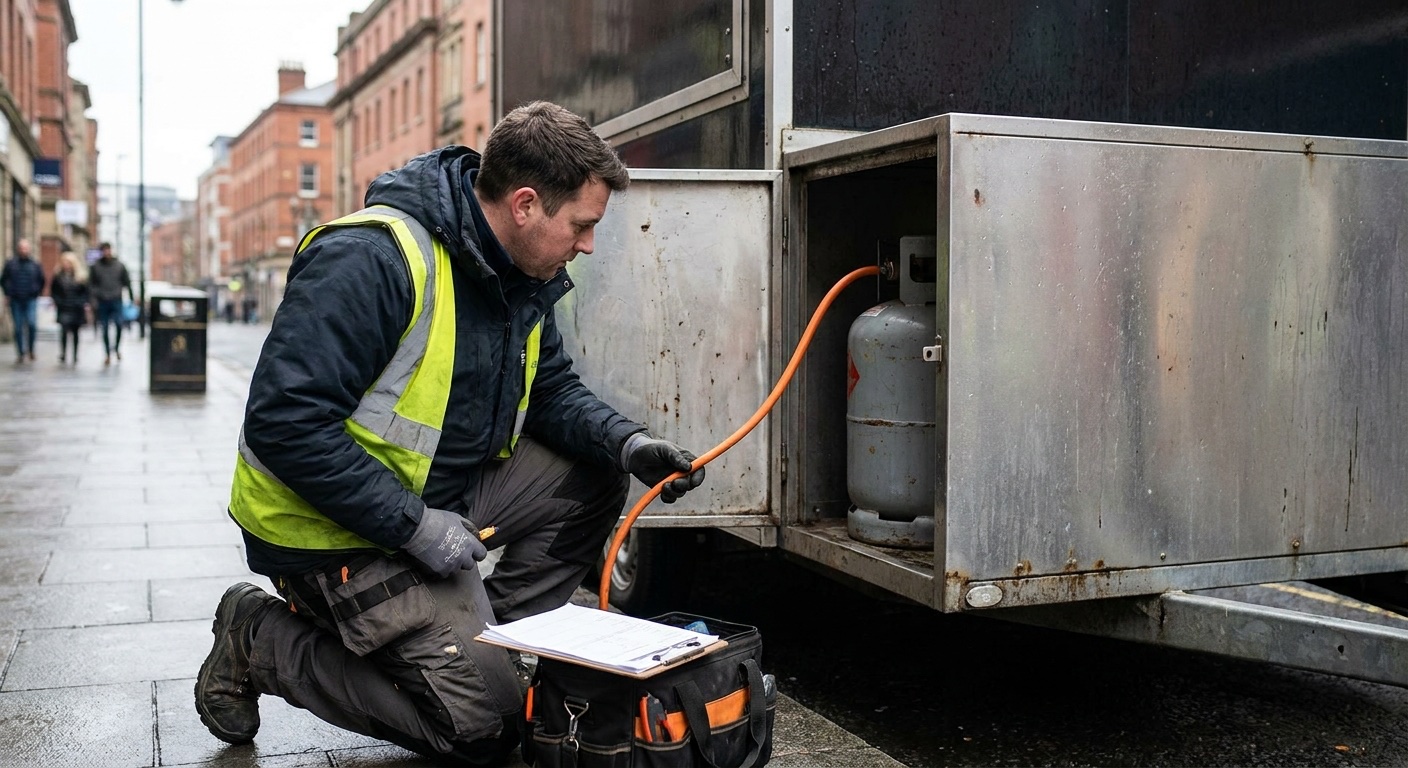
If you've never booked one, a PAT visit is undramatic. The tester plugs each item into a machine that checks earth continuity and insulation, gives the leads and plugs a proper look over, then sticks a pass label on. A fryer or urn that fails usually fails on a damaged lead, which is a cheap fix rather than a dead appliance. Book them for a quiet morning at your unit or your driveway. Done by lunch.
The insurance everyone confuses
Two different covers get mixed up constantly, and only one of them is required by law.
Public liability insurance covers you if a customer gets hurt or their property gets damaged because of your business. A dropped fryer, a tripped guy rope, a scalded hand. No law says you must have it. Try trading without it though: organisers typically want to see £5 million of cover before you're allowed on site. Some of the bigger events ask for £10 million.
Employers' liability insurance is the legal one. The moment you employ anyone who isn't close family, the law requires at least £5 million of employers' liability cover. The fine for trading without it is £2,500. Per day. There's a separate £1,000 fine just for failing to display the certificate. That casual helper you pay in cash on busy weekends? In the eyes of this law, probably an employee.
One more distinction while we're here, because it costs vendors real money. Your van insurance covers the van as a vehicle. It does not cover what happens when you're trading from it. Plenty of traders assume their commercial vehicle policy has them covered at events. It almost certainly doesn't. You want a proper traders' or catering liability policy sitting alongside the motor cover, from an insurer who knows what a tow bar and a griddle are.
What organisers actually want to see
- An in-date PAT certificate: listing your actual items, from a named tester. Twelve months old or less keeps everyone happy.
- Your insurance schedule: the page showing your name, the cover level and the expiry date. Not the whole forty-page policy.
- A fast reply: organisers chase paperwork from dozens of traders. The vendor who sends everything within the hour reads as professional before a single burger's been flipped.
💡 Pro Tip
Save both documents as PDFs on your phone today, named properly: "YourBusiness-PLI-expires-Mar-2027.pdf" beats "scan0001.pdf". When the organiser's email arrives you reply from the van in two minutes, looking like the most organised trader on their list. Because you are.
Where traders get caught out
- The expired certificate: discovered at 8am on setup day when the organiser does spot checks. Diary the renewal a month early.
- The first helper: taking on a mate for the summer without adding employers' liability. That £2,500-a-day fine doesn't care that it's casual.
- The generator gap: some policies exclude generator use or open flame unless declared. Read the schedule, declare the lot.
- The lapsed direct debit: insurance that quietly died in February surfaces in July when an organiser checks the expiry date.
Keep every certificate one tap away
Our free Annual Compliance Calendar tracks every renewal date in one place. The Staff Training Record covers the rest of the paperwork organisers ask about.
Browse All TemplatesNone of this is difficult, it's just easy to forget until an email makes it urgent. One PAT visit a year, two insurance renewals in the diary, both PDFs on your phone. That's the whole system. The traders who get the repeat bookings aren't always the best cooks. They're the ones whose paperwork never holds up the show.