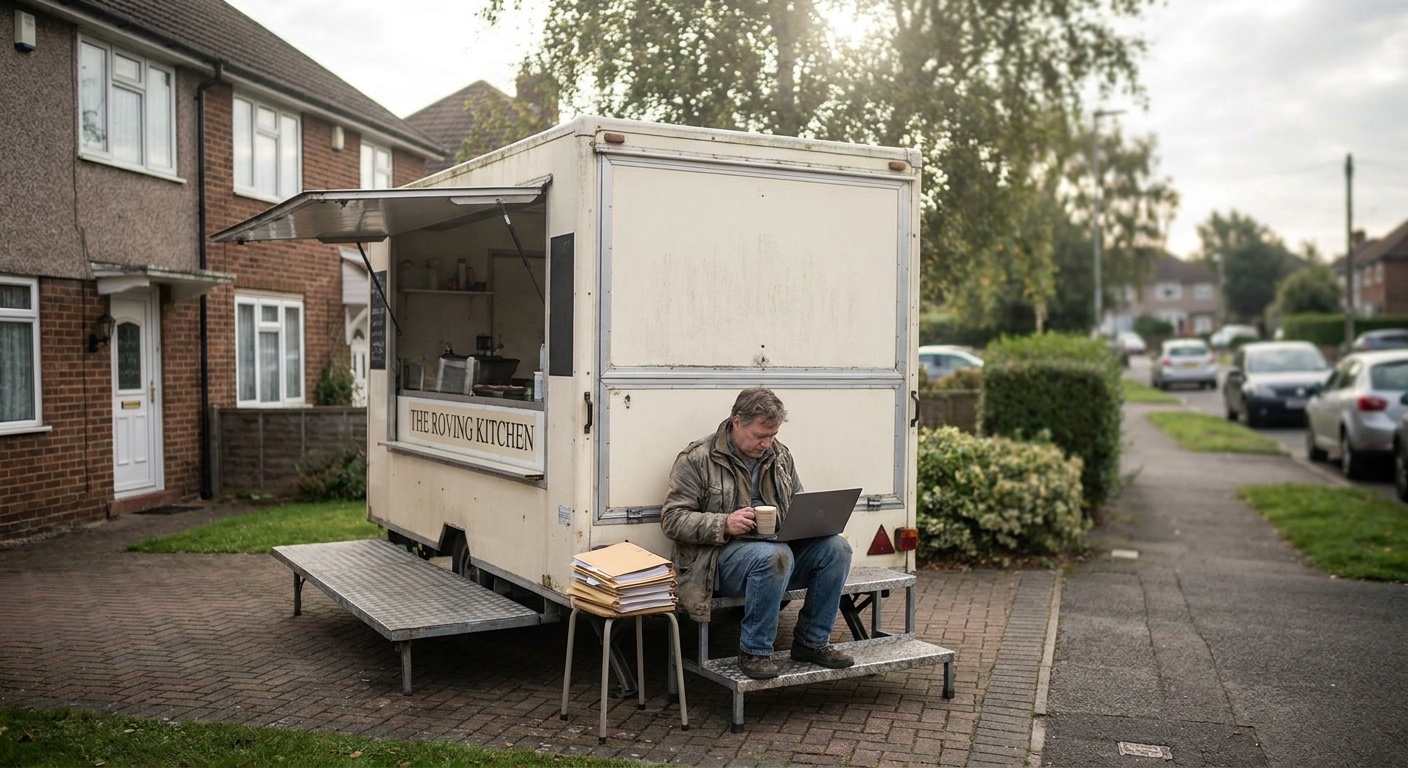
Every spring, the same sad ritual plays out across the country: vendors opening up vans in March to find seized pumps, split pipes, a flat battery. Sometimes a mouse family living rent-free behind the fryer. Winter damage isn't bad luck. It's a skipped afternoon in autumn. Here's the winterising routine that means your kit starts the new season the way you left it. It works for vans trading through the cold and for vans parking up till spring.
Water is the enemy
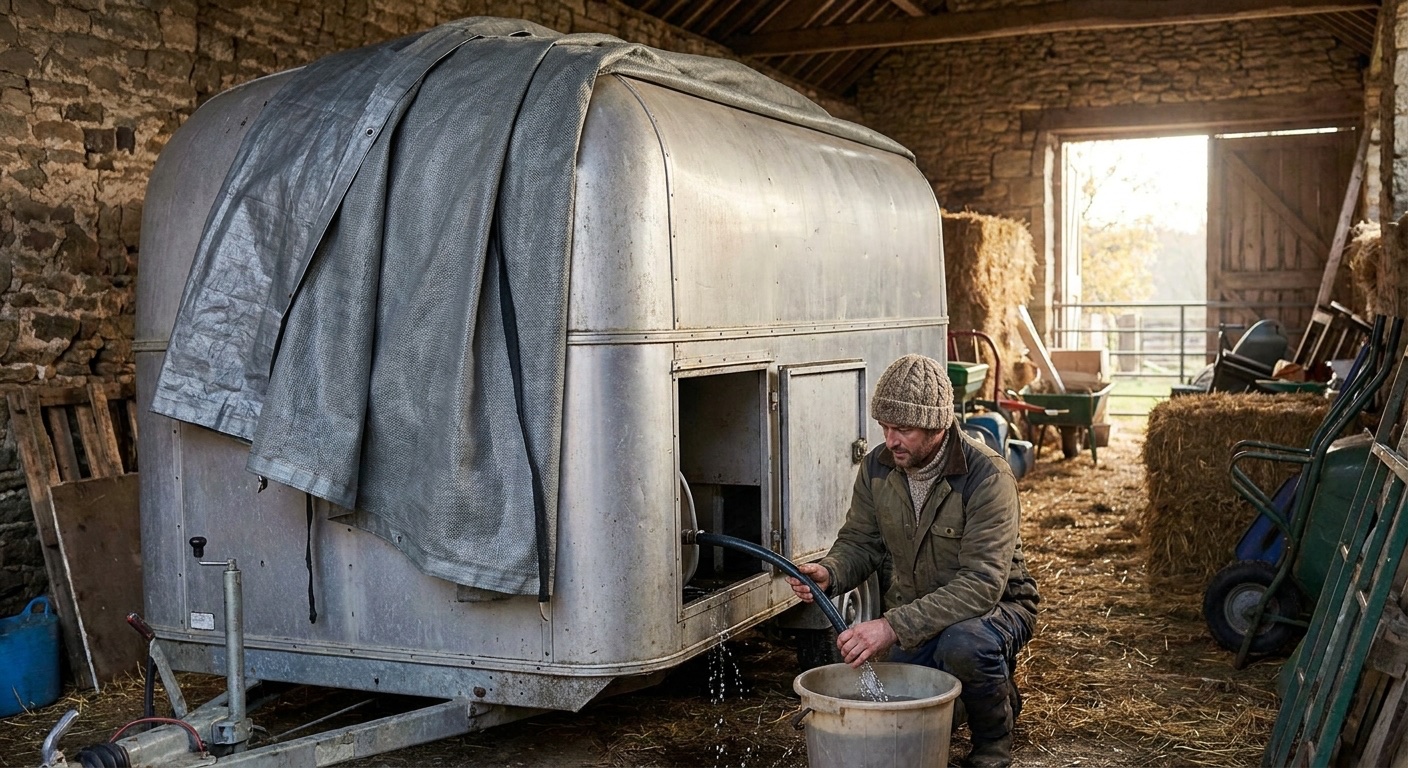
Nearly everything winter breaks, it breaks with frozen water. Water expands about 9% when it freezes, which is enough force to split copper pipe and crack pump housings. Water heaters die this way too. So the first hour of winterising is drainage: fresh tank, waste tank, water heater, pump, plus every run of pipe between them. All emptied properly. Open the taps and leave them open so any remaining drops have somewhere to expand. If your pump has a drain screw, use it. If the manual's long gone, run the pump dry for a few seconds after the tanks empty, then disconnect.
Trading through winter instead? Then insulation and habit replace drainage: lag the exposed pipe runs, drain everything after each trading day rather than leaving it to sit, and never leave tanks full overnight in a van that's parked outside. The vendors who trade Christmas markets without plumbing disasters are the ones who treat every December night like the hard frost it might be.
The shutdown checklist
- Gas off and out: cylinders closed and disconnected, then stored upright somewhere ventilated away from the van. Winter storage with cylinders aboard is asking for trouble. Your insurer probably agrees.
- Fridges emptied, dried, propped open: a closed fridge with a hint of moisture grows a science project by February. Wedge the doors ajar.
- Deep clean like an inspection's coming: every crumb left in the van is a written invitation to rodents. They chew wiring for fun. Rewiring costs more than the cleaning ever would.
- Battery on a maintainer or out: cold kills weak batteries. A cheap trickle charger over winter beats a dead van on your first booking of March.
- Fuel and fluids: tank brimmed to limit condensation, screenwash rated for freezing, oil check while you're there. Generators want a run once a month through winter, not a five-month sulk.
- Tyres and cover: pressures up, handbrake off with wheels chocked if you're parking for months, and a breathable cover rather than a tarp that sweats.
💡 Pro Tip
Before you close the doors for winter, film a two-minute phone video of everything: kit, serial numbers, condition, the lot. If anything's stolen or damaged over the storage months, your insurance claim goes from argument to formality. Same video doubles as your kit inventory for next season's event applications.
Book the fixes now, not in March
Autumn is when you have two advantages you won't have again until next year: you remember exactly what's wrong, while every engineer is quiet. The griddle that runs hot on one side, the door that needs a shoulder, the awning that sticks. Book the repairs for November and they're done for pennies in a quiet workshop. Wait until March and you're queueing behind every vendor who also waited. The season starts without you. Same logic as the gas certificate renewal: winter bookings are cheaper and calmer.
While the toolbox is out, work through our equipment maintenance checklist once properly. Winterising and the annual deep maintenance are the same afternoon if you plan them together.
Storage worth paying for
If the van lives on the street or a driveway all winter, do the sums on a storage yard or barn space for the worst months. Weather ages a parked vehicle faster than a working one, oddly, and secure storage often trims your insurance premium enough to cover a chunk of the cost. Ask your insurer before assuming. It's a five-minute call. While you're on, check the policy actually covers laid-up storage: some policies quietly assume the van is in regular use.
Make it a checklist, not a memory
Our free Cleaning Schedule Template covers the shutdown deep clean, and the Annual Compliance Calendar is the right home for the monthly generator run and the March revival date.
Browse All TemplatesOne honest afternoon in late autumn: drain, clean, disconnect, charge, film, book the fixes. Then the van sleeps properly and so can you. The vendors who open smoothly in March aren't lucky. They just did the boring afternoon in October. Sorted.